
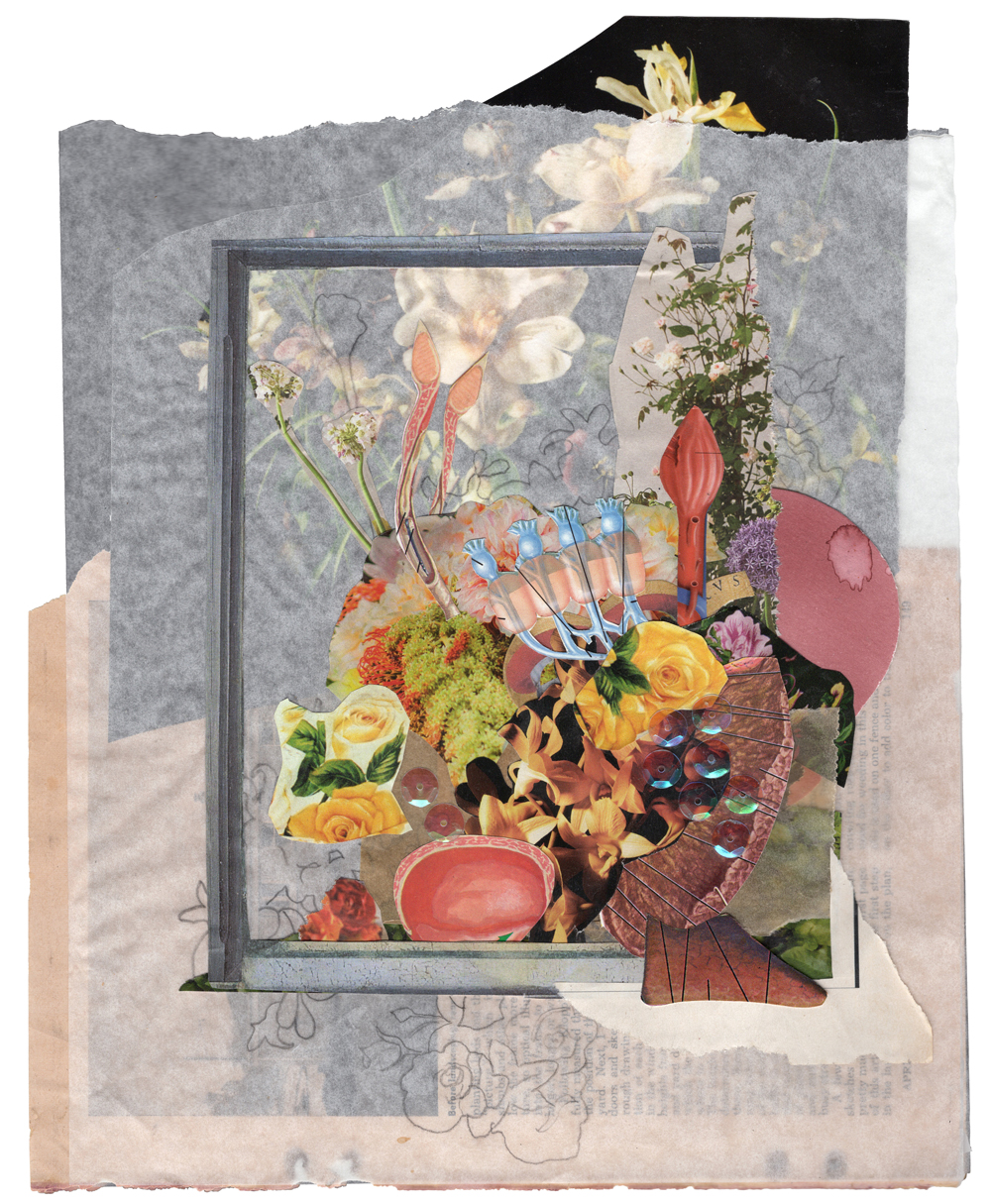
dimensions variable; grouping of 6 collages: found papers and photos, gold leaf, sequins, pencil, black clothing; 2026.
COLLAGE ON VIEW
Folklore on Parade
at Kolaj Institute Gallery in New Orleans, Louisiana, USA
14 February-11 April 2026
Exhibition Tour & Curator Talk during Second Saturday, 14 March 2026, 5PM
RSVP FOR THIS IN-PERSON EVENT
Kolaj LIVE Online: Folklore on Parade, Thursday, 26 March 2026, 7-9PM EDT
LEARN MORE
Closing Event during Second Saturday, 11 April 2026, 6-8PM
Kolaj Institute’s Folklore Collage Society project considers the role artists play in activating, transmitting, and celebrating folklore in communities as a form of cultural expression and a strategy for community resilience. In recent months, Kolaj Institute hosted a series of virtual and in-person residencies during which artists researched folklore globally and carnival in New Orleans, specifically. The exhibition “Folklore on Parade,” brings together the work of sixteen artists, each of whom are speaking to ideas about carnival and folklore and its role in our communities.
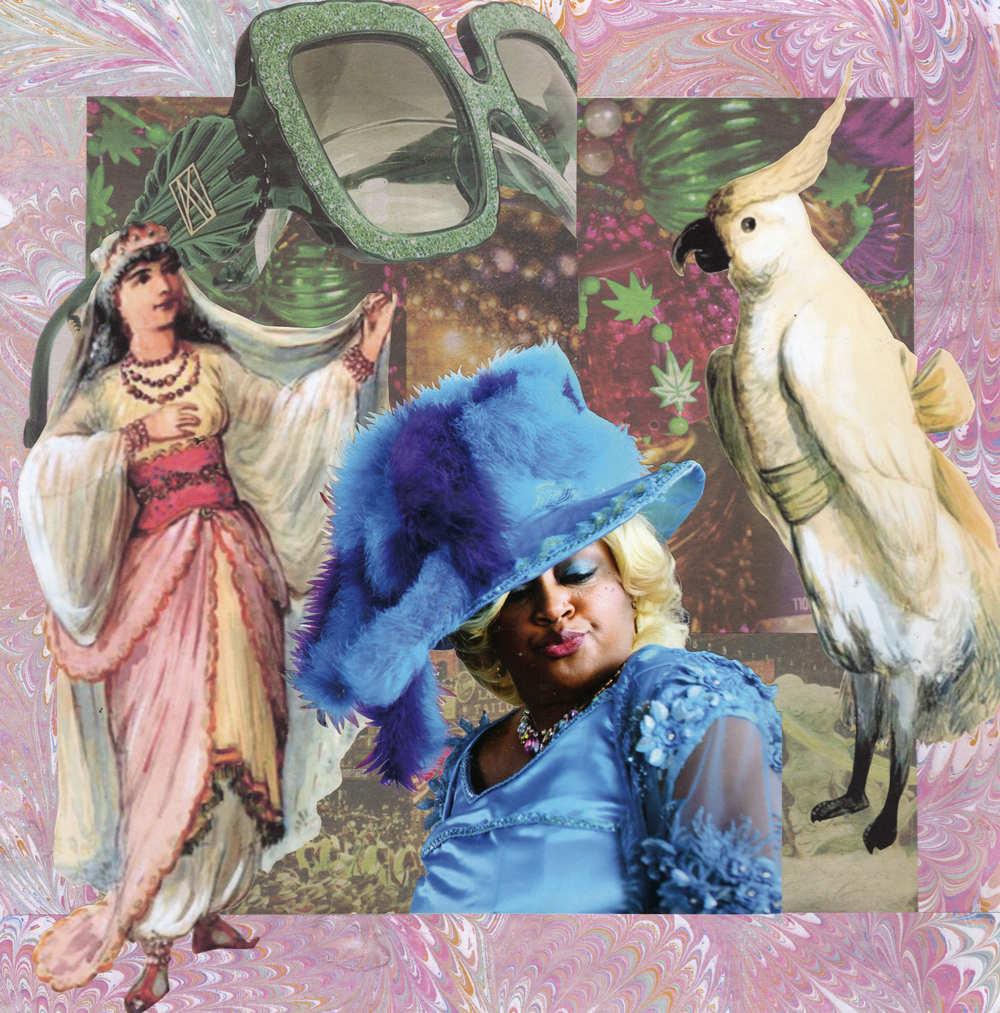
12″x12″; handmade ebru marbled paper, Joell Lee with the Black Storyville Baby Dolls (2018) from Cherchez la Femme: New Orleans Women by Cheryl Gerber (2019), Damsel 02 [Krewe of Proteus, 1894: Sha-Nameh] by Carlotta Bonnecaze and Cockatoo [Krewe of Proteus, 1896: Dumb Society] by Carlotta Bonnecaze from the Tulane University Archives on fluid 300 gsm watercolor paper; 2026.
“Folklore is a broad category of culture distinguished by its method of transmission. When we look at culture through the lens of Folklore, we see culture shaping our sense of place, our relationship to communities, and a framework for how we exist in the world around us,” wrote curator Ric Kasini Kadour. “Carnival in New Orleans could be considered the largest, ongoing folklore festival in the world.”
In the exhibition artists are sharing stories about Carnival. Set on a “New Orleans-Opoly” game board, Carol M Lynch‘s collage, Takin’ It To The Streets, speaks to the Carnival traditions of Black Masking Indians as a force of community cohesion and well-being. Another collage from Lynch recalls the story of the old Mardi Gras anthem, “If Ever I Cease to Love.” Charulata Prasada‘s collage based on the colors of Carnival invites us to remember the economic, social, and political history from which Carnival arose. Heidi Hickman presents Carnival as gumbo of culture. Julie Glass invites us to think about the walkers and spectators who enjoy the festival and the memories that are made, while Ric Kasini Kadour reflects on a French Quarter character whose story is becoming folklore. Jennifer Evans‘ collages juxtapose contemporary women of Carnival with their 19th century antecedents.
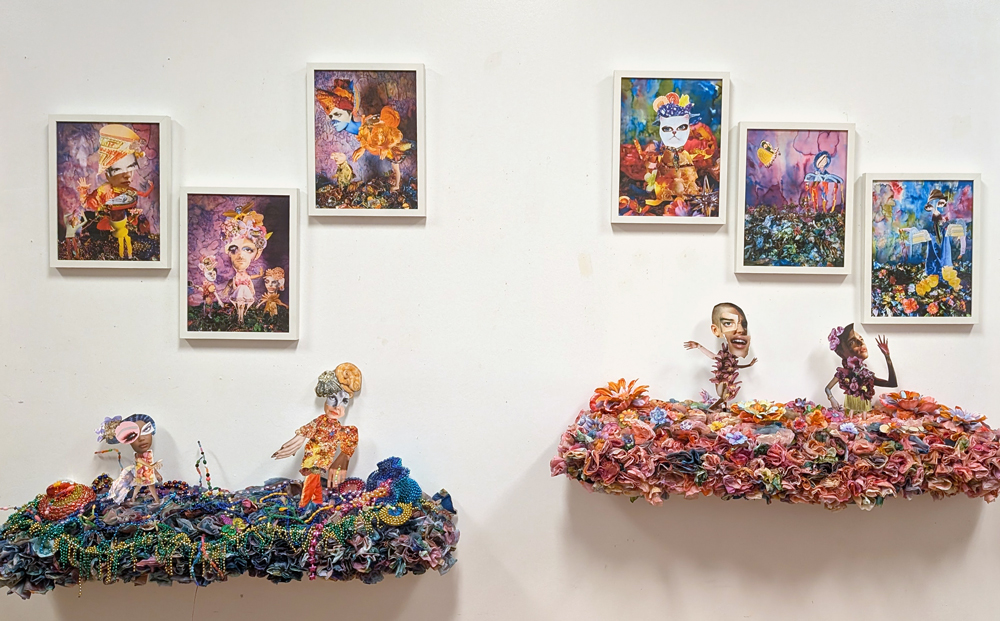
An installation by Emily Denlinger (with contributions from Catherine Cassel, LaVonna Varnado Brown, and Julie Eisenberg Pitman) teaches us about collective effervescence, the heightened sense of energy and unity individuals feel when they come together as a group for a shared experience.
Artwork by Tracy von Ahsen, Kayte Terry, and Trish Crapo explore veils, liminality, death, and offerings: themes that often appear in folklore. Shacqeel Coleby‘s collage reflects on a story about locking down the dead. Artwork by Tiffany Wilson and CoCo Harris offer viewers the opportunity to consider the blurry line between folklore and history.
“Folklore on Parade” is a beginning. In the coming months, artists will come together in virtual and in-person forums to talk about their work and articles will appear in future issues of the Folklore Collage Society journal and Kolaj Magazine, where the history, folklore, themes, and ideas raised by this artwork will be explored more deeply.
ABOUT KOLAJ INSTITUTE
The mission of Kolaj Institute is to support artists, curators, and writers who seek to study, document, and disseminate ideas that deepen our understanding of collage as a medium, a genre, a community, and a 21st century movement. We operate a number of initiatives meant to bring together community, investigate critical issues, and raise collage’s standing in the art world.
ABOUT KOLAJ INSTITUTE GALLERY IN NEW ORLEANS
Kolaj Institute’s Gallery in New Orleans presents exhibitions and connects Kolaj Institute and the artists we work with to the vibrant St. Claude Arts District. We produce 8-10 exhibitions a year and participate in Second Saturday, the neighborhood’s monthly art walk, putting the collage art, books and exhibitions in front of New Orleanians and visitors. The Gallery is located at 2374 Saint Claude Avenue, Suite 230, at the corner with St. Roch Avenue on the 2nd floor. The marked door is on Saint Claude, look for the sandwich board sign when we are open. The Gallery is open Thursday-Saturday, Noon-6PM or by appointment.
ABOUT FOLKLORE COLLAGE SOCIETY
Kolaj Institute’s Folklore Collage Society project considers the role artists play in activating, transmitting, and celebrating folklore in communities as a form of cultural expression and a strategy for community resilience. In addition to a periodic printed journal, Folklore Collage Society manifests as artist residencies; articles in Kolaj Magazine; programs at Kolaj Fest New Orleans and Kolaj LIVE Online; and exhibitions.