
RESIDENCY UPDATE
The Fragment as Verse: PoetryXCollage In-Person Artist Residency
An in-person residency in New Orleans, Sunday, 12 April to Thursday, 16 April 2026
Poetry is an art form that uses language and rhythm to express ideas, convey emotions, and share stories. In poetry, the aesthetic qualities of language make deeper meaning out of words, condensed language, and fragmented text. At its heart, collage is the juxtaposition of visual imagery composed in such a way as to do the same. Each of these art forms invites their audiences to revel in the complexity, richness, and nuance of contemporary life. Since 2022, Kolaj Institute has explored the intersection of poetry and collage. In Kolaj 32, Rod T. Boyer’s article “Mind the Gap: Collision and Context in Haiku and Collage“ compares the disjunction that occurs in haiku with a similar phenomenon in collage. Since then, we organized a series of residencies to explore the intersection of poetry and collage. We are interested in found poetry, blackout poetry, collage poems, haikus, centos, response collages, response poems, word scrambles, concrete poetry, scatter collage poems, and other poems and artwork that inhabit this world. Kolaj Institute’s PoetryXCollage project explores and documents the intersection of poetry and collage through a series of residencies, workshops, exhibitions, and PoetryXCollage, a printed journal of artwork and writing that operates at the intersection.
In April 2026, Kolaj Institute Gallery in New Orleans presents the exhibition, “The Fragment as Verse on the Wall”, where all of the work in the exhibition stands at the intersection of poetry and collage. Often work at the intersection of poetry and collage is made for the page. In this exhibition, we will consider how artwork at the intersection operates on the gallery wall. When viewing this work, we are encouraged to think of the fragment which may be text or image as a verse in a complete poem.
To support artists working at the intersection of poetry and collage, Kolaj Institute organized an in-person residency taking place at Kolaj Institute Gallery in New Orleans,12-16 April 2026, and led by Ric Kasini Kadour. In this residency, artists explored the intersection of poetry and collage, considered the role of these two artforms in their artist practice, and developed strategies for diffusing their artwork on the page and the gallery wall.
The focus of the In-Person Residency, “The Fragment as Verse on the Wall”, was about making artwork for the exhibition, “The Fragment as Verse”. From Noon on Sunday, 12 April 2026 to 2PM on Friday, 16 April 2026, artists had 24-hour access to the gallery, studio, and material library where they could work in community to make collage poetry. In daily meetings, artists shared work and received feedback from one another. Prior to the residency, artists met virtually where Ric Kasini Kadour made presentations on the history of the project, artist practice, and the ecosystem of PoetryXCollage and Jennifer Roche presented her observations of the intersection. Through in person discussions, artists explored how the art they make at the intersection of poetry and collage exists on the printed page and on the wall of a gallery. Artists were invited to present their work at the opening of the exhibition, “The Fragment as Verse on the Wall”, on Saturday, 18 April 2026, 2-4PM. The in-person artist residency at Kolaj Institute Gallery coincided with the New Orleans Poetry Festival (16-19 April 2026) where we hope artists will connect with poets, editors, and publishers.
OUTCOME
After the Residency, artists were invited to submit work for the PoetryXCollage journal and for an exhibition on Poetry & Collage at Kolaj Institute Gallery, “The Fragment as Verse on the Wall”, 18 April-23 May 2026.
PARTICIPATING ARTISTS
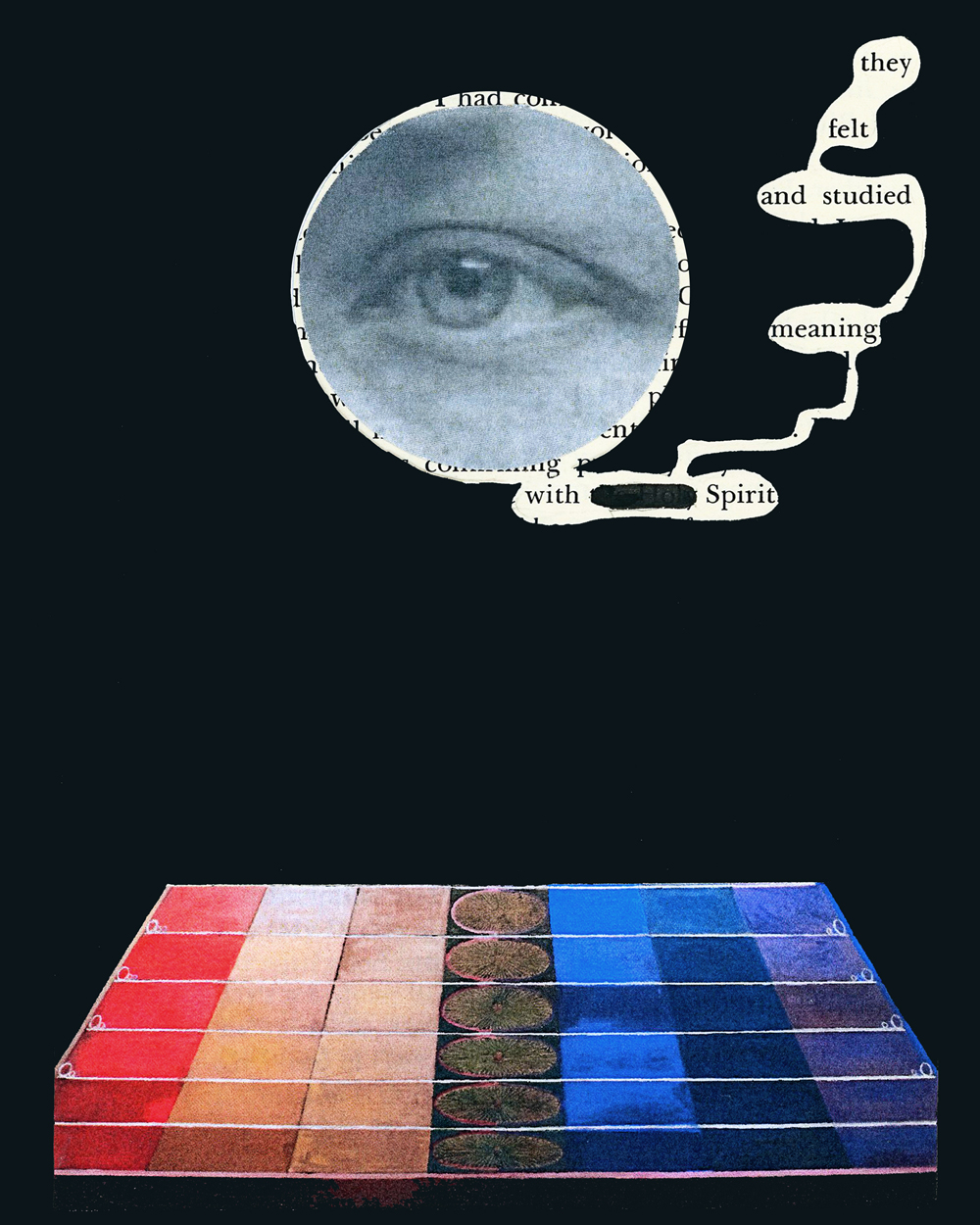
8.25″x5.5″; found text, found papers, ink, part of Altarpiece, No. 1 by Hilma Af Klint (1915); 2026. Courtesy of the artist.
Anika Toro, Knoxville, Tennessee, USA
www.anikatoro.com
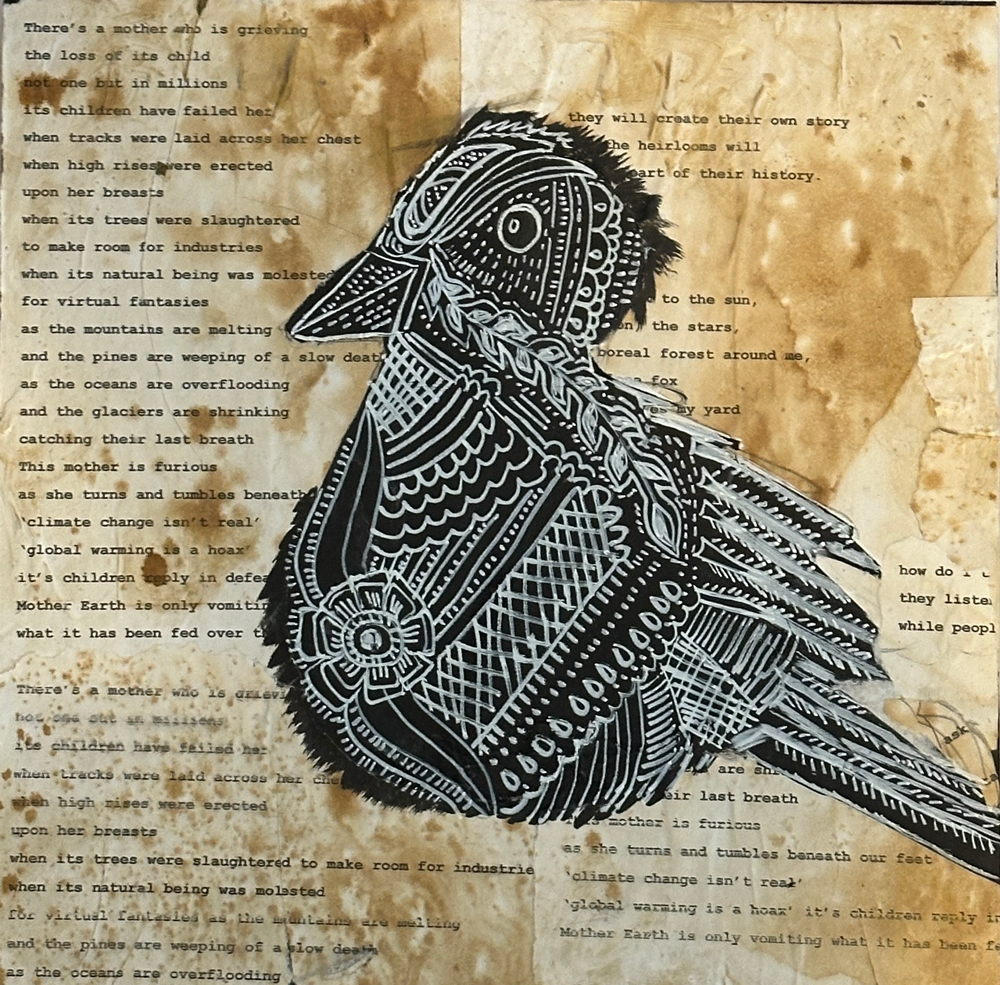
10″x10″; coffee-stained paper and white ink on wood panel; 2025. Courtesy of the artist.
Jamal-e-Fatima Rifat, Fort McMurray, Alberta, Canada
the-crafted-writer-studio.square.site
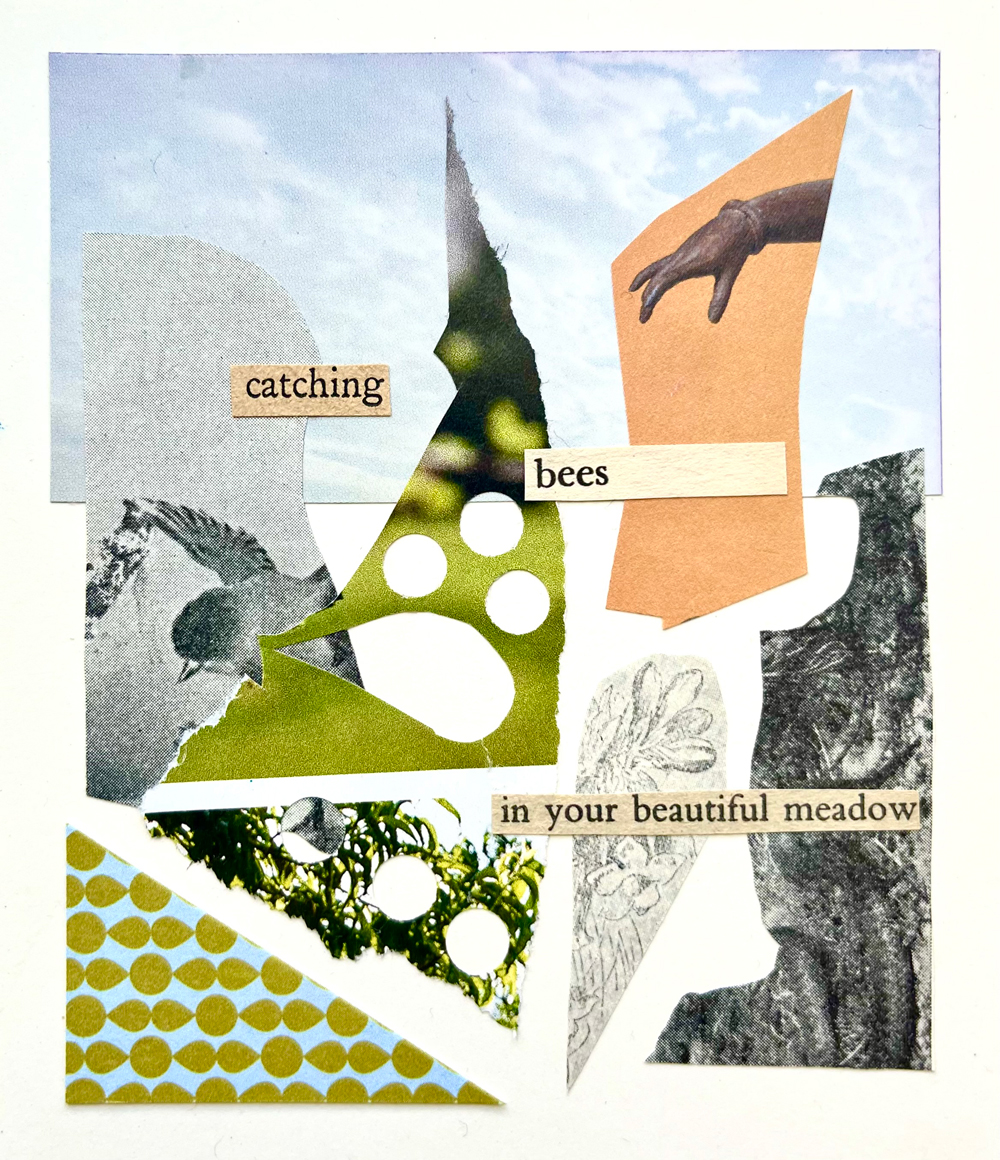
4.5″x4″; paper collage; 2022. Courtesy of the artist.
Kara McKeever, Kansas City, Missouri, USA
www.karamckeever.com
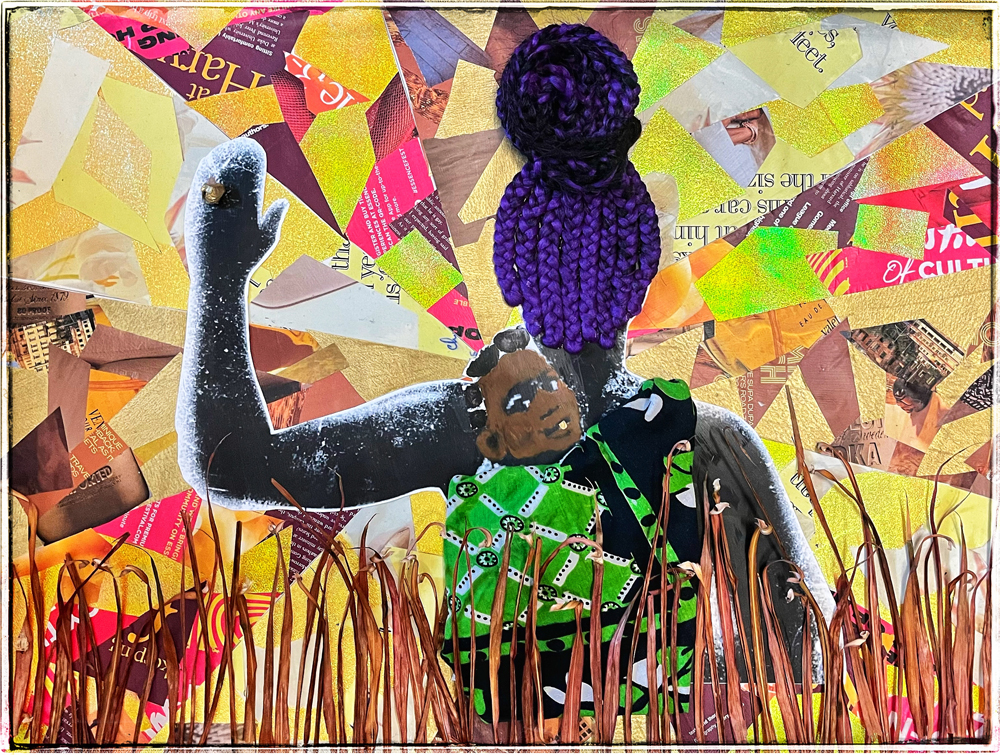
16″x20″; fabric, paper, portrait, synthetic hair, and found objects; 2025
Leslie Polk, Silver Spring, Maryland, USA
ABOUT RIC KASINI KADOUR
Ric Kasini Kadour, a 2021 Andy Warhol Foundation for the Visual Arts Curatorial Fellow, is a writer, artist, publisher, cultural worker, and the director of Kolaj Institute. His curation work includes exhibitions in Louisiana, New Mexico, Quebec, Scotland, Tennessee, Wisconsin, and Vermont. Kadour is the editor and publisher of Kolaj Magazine, as well as the editor of the Kolaj Institute journals, PoetryXCollage and Folklore Collage Society. He has written for a number of galleries and his writing has appeared in publications including Hyperallergic, OEI, Art New England (where he was the former Vermont editor), and Wissenschaft und Frieden. Kadour maintains an active art practice and his photography, collage, film and sculpture have been exhibited in and are part of private collections in Australia, Europe and North America. In January-February 2020, he was artist-in-residence at MERZ Gallery in Sanquhar, Scotland. He holds a BA in Comparative Religion from the University of Vermont. Kadour splits his time between Montreal and New Orleans.