
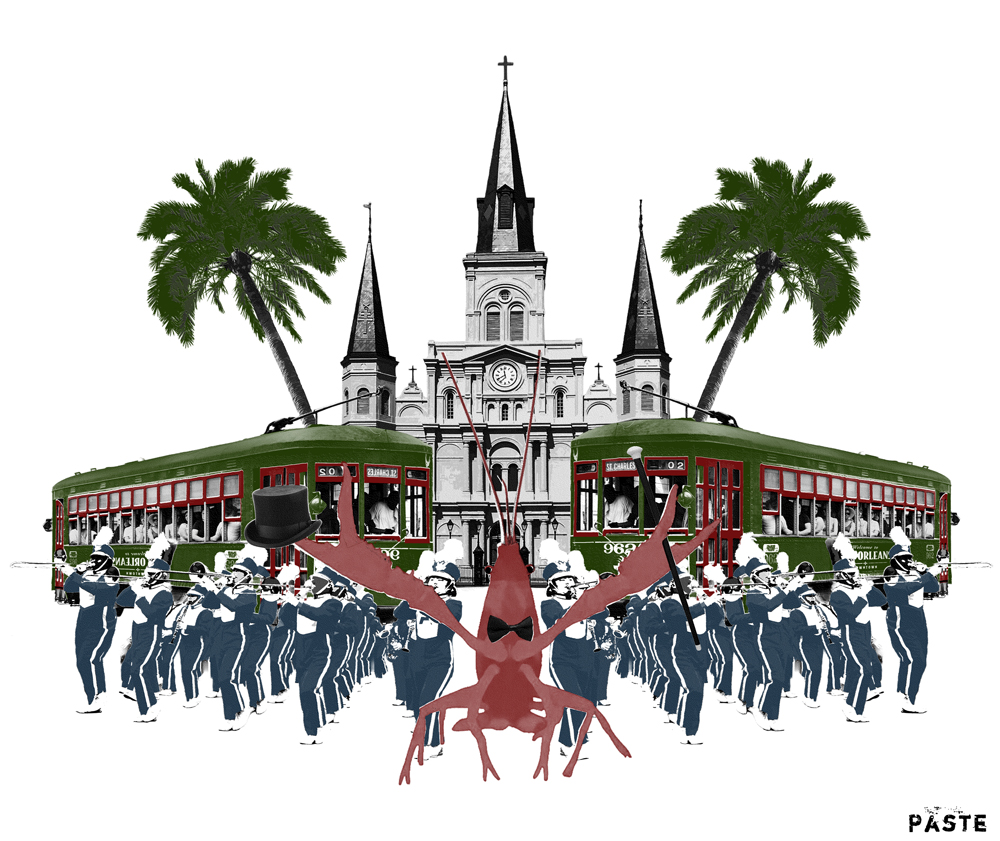
9″x12″; digital collage, silkscreened print. Courtesy of the artist.
COLLAGE ON VIEW DURING KOLAJ FEST NEW ORLEANS 2026
Collage in the Crescent City
Kolaj Fest New Orleans is a multi-day festival and symposium about contemporary collage and its role in art, culture, and society, 10-14 June 2026. Visit the website to learn more, see an overview of the program, and register to attend.
COLLAGE ON VIEW
Jacob Laurits: Paste
at Paste, 721 Royal Street, New Orleans 70116
Ongoing
www.pasteusa.com
Jason Laurits (image above) created his graphics line “Paste” over 20 years ago in New York City as a comment on the overperfecting of Photoshop. Laurits wrote, “Named after the kids’ adhesive we all first used (and maybe ate), Paste is digital-collaged, purposely ‘bad Photoshop’ images—unpolished and imperfect—as a way to keep things authentic (and perhaps human) in an age of Photoshop and now AI. Images are then hand-silkscreened onto gallery paper or high-quality, cotton t-shirts.” Laurits opened this first, full-fledged Paste store in March, after moving down to New Orleans in 2024. Paste is open Thursday-Monday, 11AM-7PM.
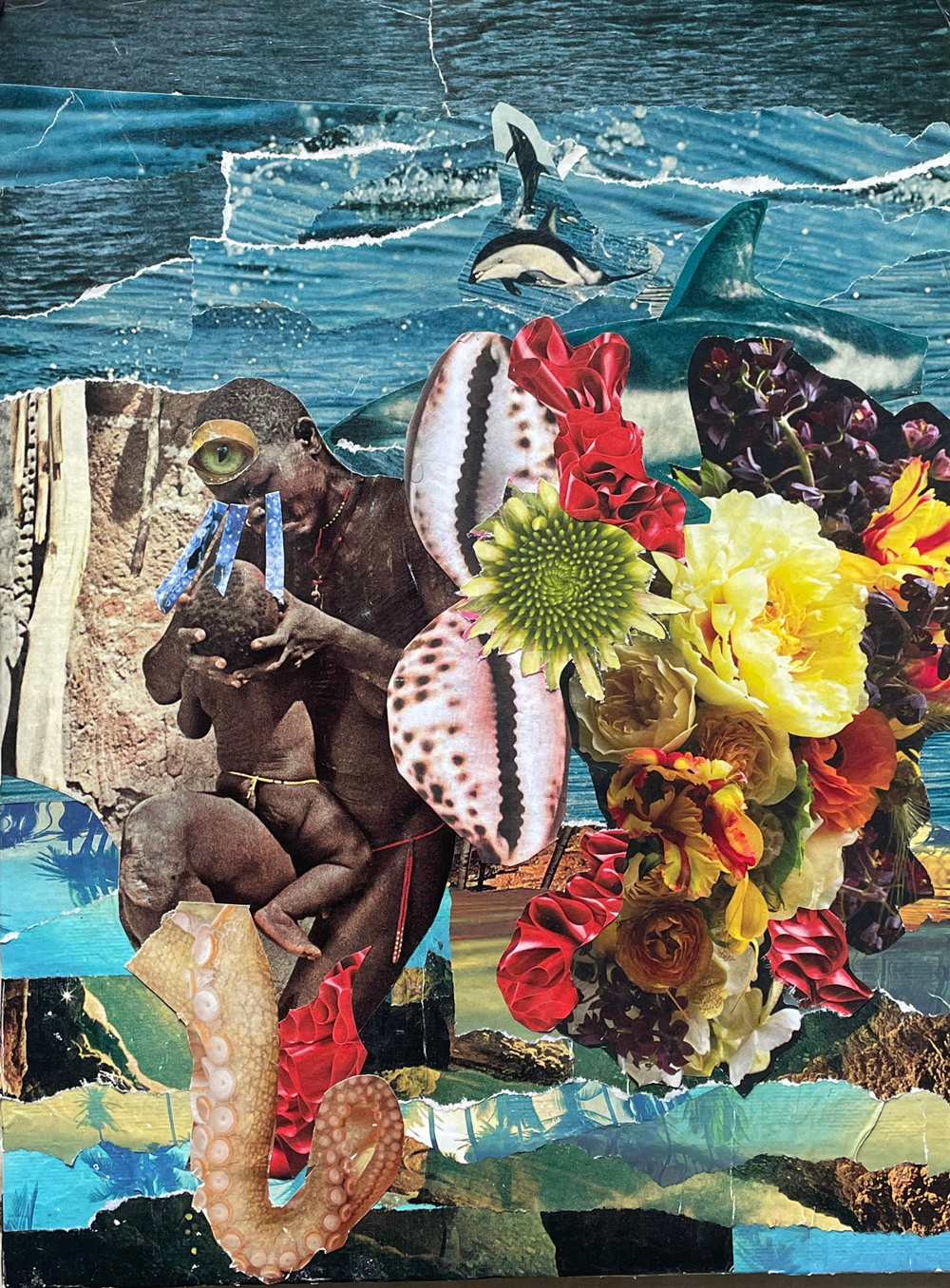
Courtesy of the artist.
COLLAGE ON VIEW
Time is a Shapeshifter
at The Front, 4100 Saint Claude Avenue, New Orleans 70117
13 June-5 July 2026
www.frontnola.org
Opening reception: Saturday, 13 June 2026, 6PM
“Time Is a Shapeshifter” brings together female-identified artists of color 40+, based in Louisiana, whose work engages memory, survival, and the shifting relationship between past, present, and future. Inspired by the speculative thinking of Octavia E. Butler, the exhibition approaches time as lived and nonlinear: something that folds, stretches, and repeats. In Louisiana, the past is never separate from the present, and the future is something we are actively shaping. Work in the exhibition spans abstraction and representation, drawing on archives, landscape, the body, ancestry, spirituality, and the politics of survival. Curated by Angela Lynn Tucker. The exhibition is in Room 1 of the gallery. An opening reception will take place Saturday, 13 June 2026 at 6PM.
COLLAGE ON VIEW
Exhibitions at the New Orleans Museum of Art
1 Collins C. Diboll Circle in City Park, New Orleans 70124
www.noma.org
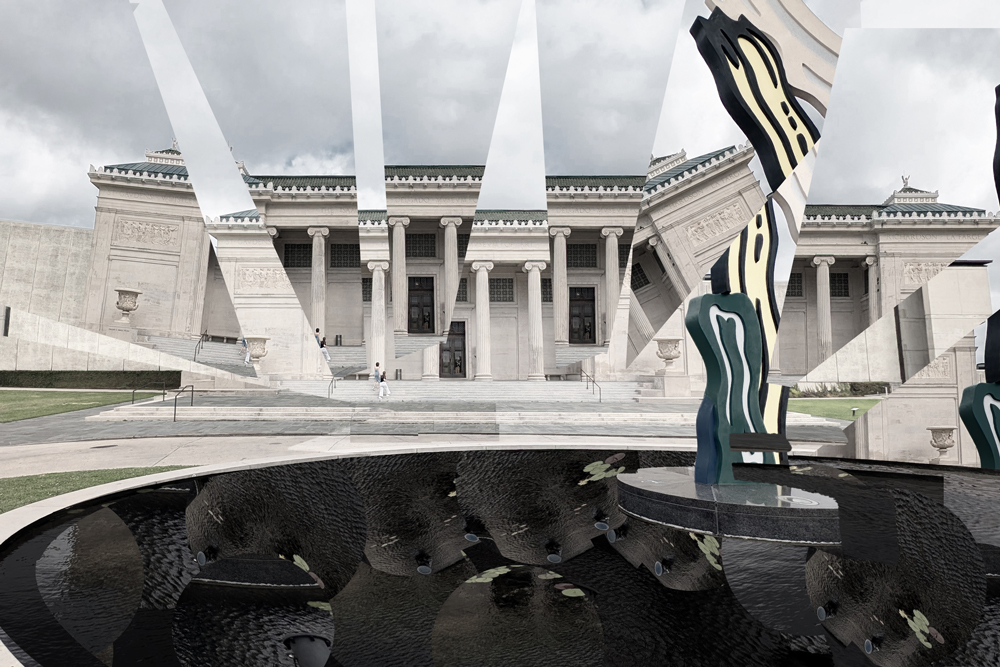
The New Orleans Museum of Art (NOMA) and its Sydney and Walda Besthoff Sculpture Garden present exhibitions, installations, educational programs, and research. The museum holds a collection of nearly 50,000 works, with holdings in African art, photography, decorative arts, as well as artwork from France, Japan, and the US, and an expanding collection highlighting contemporary artists. .
On Permanent Display: Melic Meeting (Spread) by Robert Rauschenberg (Modern Art Galleries, Second Floor) As part of the celebration of Robert Rauschenberg’s 100th birthday in 2025, the New Orleans Museum of Art asked artists Ryan Leitner; LaVonna Varnado Brown, part of the 2024-2025 Creative Assembly Cohort; and Ric Kasini Kadour, Kolaj Institute Director, to reflect on his legacy in the work Melic Meeting (Spread) from 1979. Kadour wrote, “Melic Meeting brings me a great deal of joy and if I’m honest, no small part of that is the blue point Siamese cat staring at you when you look at the artwork. Rauschenberg is a mythic figure in the art world, but his artwork comes from a place of deep thinking about humanity.”
“George Dureau: Selected Photographs” through 9 August 2026. New Orleans artist George Dureau (1930–2014) began making photographs in the 1960s as an aid to his painting and drawing centered on the human figure. Consequently, his photography focused on muscular contours, faces, and poses inspired by western art history. By the mid-1970s, Dureau increasingly explored the camera’s capacity to render the human form clearly and beautifully while experimenting with light, space, and the body as compositional elements. As much as Dureau’s photographs flaunted taboos against presenting images of nude men, particularly Black men, in a gallery or museum setting, they illustrate his attempt to use elements of photography—like light, tone, and form—to make a picture that represents both the physical and interior lives of the person in front of the camera.
“Robert Gordy: Outside the Mainstream” through 11 October 2026. Louisiana native Robert Gordy (1933–1986) is best known today for his prints and late monotypes, but he worked in a range of media throughout his career. This exhibition shares selections from Gordy’s career from the 1950s until his premature death from AIDS in 1986. In 1982, Gordy turned almost exclusively to the creation of monotypes, unique prints made through the direct application of pigment to the printing plate. While print-making had always been an important component of his practice, it now took precedence. Using a large-scale press, Gordy reveled in the freedom and expressive possibilities afforded by the process. The artist’s gesture, always present in Gordy’s preliminary drawings and sketches, but absent from his completed paintings, sat at the forefront.
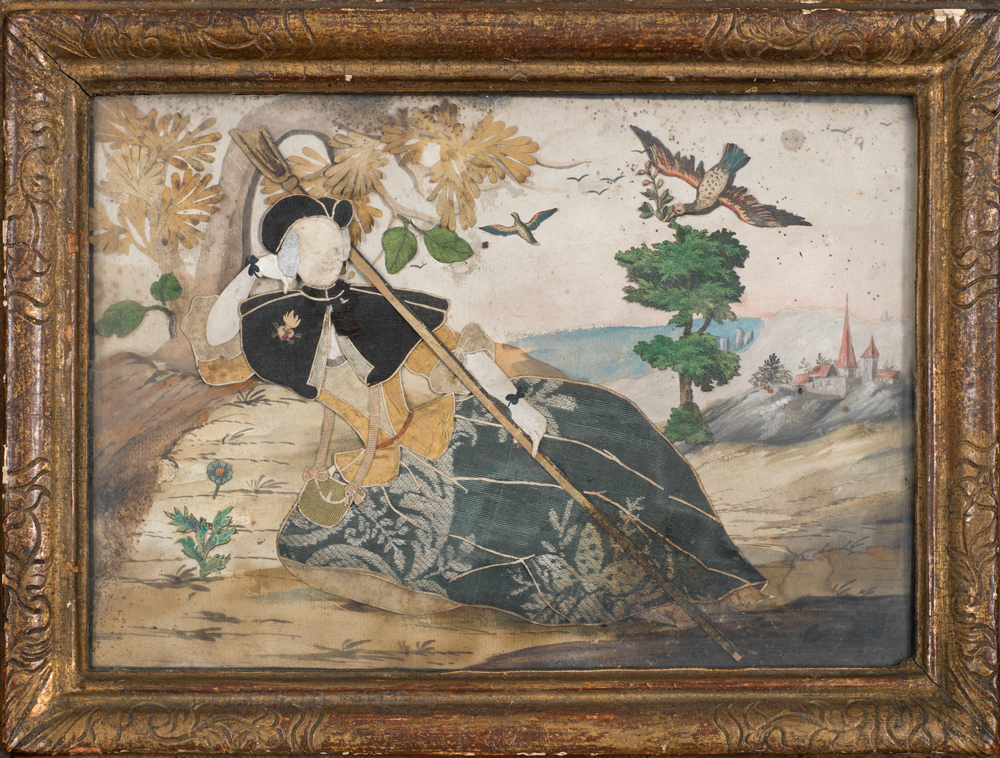
10.25″x13.375″ (framed); watercolor, cloth, paper, ink; between 1795 and 1805. Courtesy of The Historic New Orleans Collection. 1973.21.2
COLLAGE ON VIEW
The Historic New Orleans Collection
520 Royal Street, New Orleans 70130
www.hnoc.org
The Historic New Orleans Collection’s collection of collage on display includes the Brulator Courtyard Mosaic (2019) by Tana Coman and Picture Mosaic LLC, which includes images drawn from HNOC’s holdings, publications and exhibition graphics, and depicts the courtyard at HNOC’s Royal Street location. Also in the collection, Homage to the French Quarter (1975) by Noel Rockmore, which is filled with neighborhood imagery; and Upstairs Lounge 1 (2019), a collage by Peter Mallen in honor of the thirty-two queer men who were killed in the Upstairs Lounge fire on 24 June 1973.
The Historic New Orleans Collection
Williams Research Center
410 Chartres Street, New Orleans 70130
www.hnoc.org
In the holdings of the Historic New Orleans Collection’s Williams Research Center at 410 Chartres Street are Gentlewoman and Gentleman, rare examples of late 18th-early 19th century collage; Mardi Gras Parade Scene (1945), by muralist Paul Ninas (1903-1964), a pastiche view based on multiple 1890s Proteus parades; William Henry Brown’s (1808-1883) Hauling the Whole Weeks Pickings; the Louisiana Cycling Club Spokes Scrapbooks (1887-1891); and the collaged architectural drawings of 722 Toulouse Street, made in 1978 to commemorate the opening of HNOC’s new Manuscript Division, among others.