
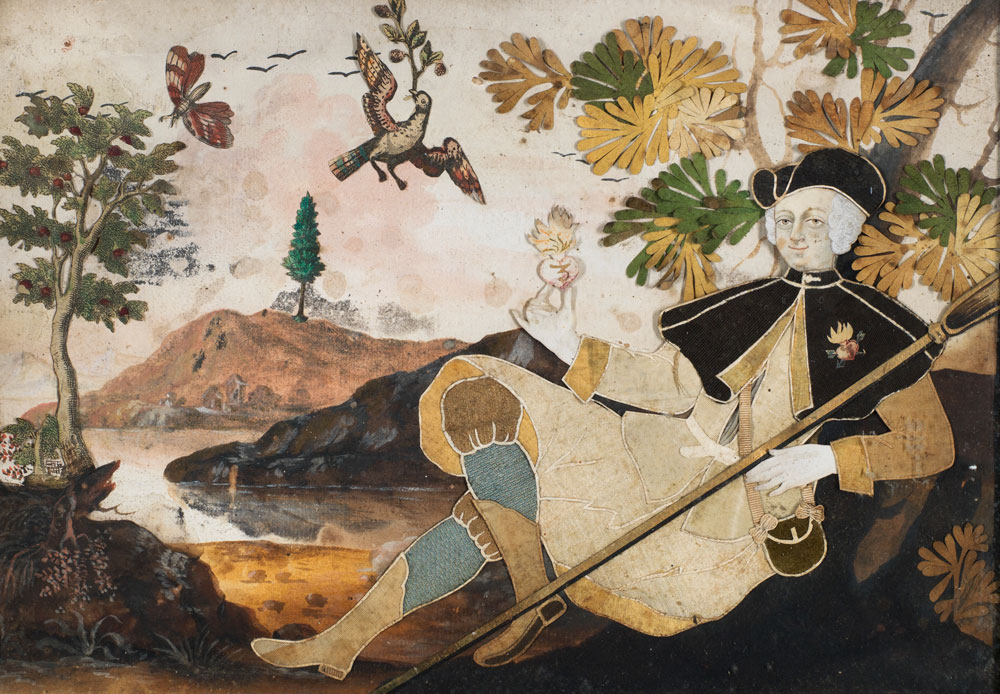
10.25″x13.75″ (framed); watercolor, cloth, paper, ink; between 1795 and 1805. Courtesy of The Historic New Orleans Collection. 1973.21.1
AT KOLAJ FEST NEW ORLEANS 2026
Kolaj Fest New Orleans Visits The Historic New Orleans Collection
EVENT WEBSITE | REGISTER
Kolaj Fest New Orleans is a multi-day festival and symposium about contemporary collage and its role in art, culture, and society, 10-14 June 2026. Visit the website to learn more, see an overview of the program, and register to attend.
Kolaj Institute is excited to visit The Historic New Orleans Collection for an afternoon of programs. Through a no-charge museum on Royal Street and a research center on Chartres Street, The Historic New Orleans Collection makes history available to the general public and history researchers. HNOC has been an invaluable asset to collage artists who visit New Orleans to research and make art about the city. On Thursday, 11 June 2026, HNOC will host a series of afternoon programs from 2PM to 4PM at the Williams Research Center, 410 Chartres Street. The programs are open to anyone visiting the Research Center.
Symposium sessions at Kolaj Fest New Orleans bring together a group of artists who speak about a central theme. Artists, writers, academics, and curators present slideshows which are followed by a Question & Answer period.
SYMPOSIUM
Collage in the Collection: Visit with the The Historic New Orleans Collection
Robert Ticknor and Heather Green
Thursday, 11 June 2026, 2-2:45PM
Williams Research Center, 410 Chartres Street
The Historic New Orleans Collection (HNOC), a museum, publisher, and research center, was founded in 1966 and grew from the collection of its founders, Kemper and Leila Williams. “The Historic New Orleans Collection (HNOC) strives to expand our understanding of the past, present, and future through research, stories, objects, documents, and works of art,” wrote the organization. “We share our passion for the meanings of history and culture so people from our diverse communities and beyond recognize their own experiences and relevance to their own lives. Through our respect for the traditions, culture, and history of all people, we welcome everyone in our quest to build an equitable and enlightened future.” Through a no-charge museum on Royal Street and a research center on Chartres Street, HNOC makes history available to the general public and history researchers. HNOC has been an invaluable asset to collage artists who visit New Orleans to research and make art about the city.
During this session, we will hear from Outreach Historian Robert Ticknor and Head of Reader Services Heather Green from the Williams Research Center. Green will introduce HNOC and speak about how artists can use archives and collections to inform their work. Ticknor will present three examples of collage in the collection. While little is known about the collage artist who made them, a pair of antique appliqued embroidery and decorated paper under glass, Gentlewoman and Gentleman, are rare examples of late 18th-early 19th century collage. These works hung in the HNOC founders’ Santa Barbara, California home. William Henry Brown (1808-1883) was an itinerant portrait painter and silhouettist who first worked in New England and then went South to Charleston, South Carolina; St. Louis, Missouri; Natchez, Mississippi; and New Orleans. Sometime between 1837 and 1847, he made the four-panel collage series, Hauling the Whole Weeks Picking, which shows an enslaved person transporting cotton. Made between 1887 and 1891, the Louisiana Cycling Club Spokes Scrapbook is full of “original artwork and collages, printed ephemera such as announcements, newsletters, programs, and race rules, as well as newsclippings and photographs.” Ticknor wrote, “The guy who did it clearly had a whimsical sense of humor, very Python-esque.” Each of these examples counter the dominant narrative of collage as a fine art form created in the early 20th century and illustrate how too-often unrecognized artists were employing collage techniques in their creative production centuries before.
SYMPOSIUM
Architecture as Collage, Collage as Architecture
Clive Knights, Michael Eble, Robert Ticknor, Seth Ter Haar
Thursday, 11 June 2026, 3-4PM
Williams Research Center, 410 Chartres Street
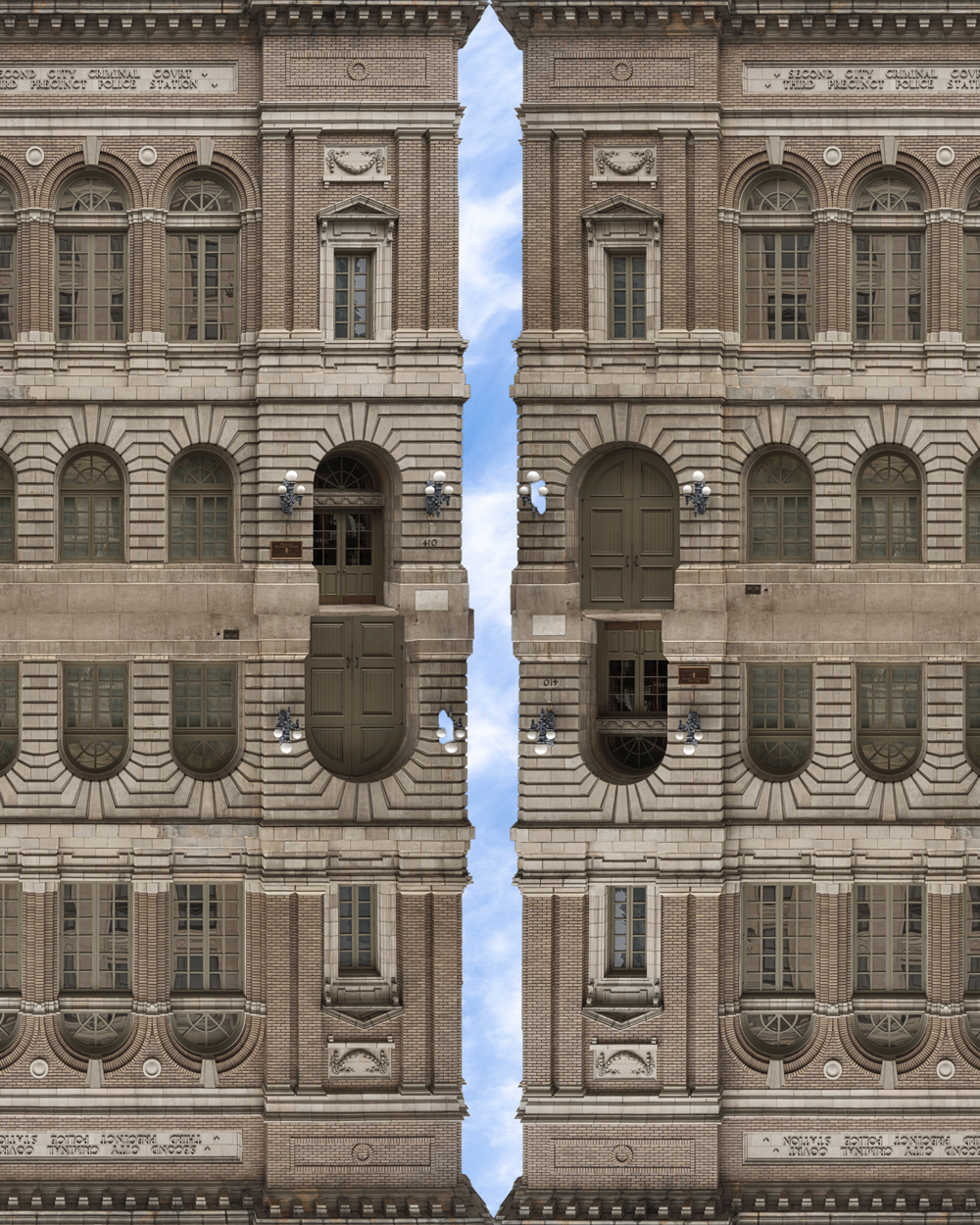
Collage and modern architecture share a closely connected history. In the early twentieth century, as mass printing, photography, advertising, and illustrated magazines became increasingly accessible, artists and designers began cutting, combining, and recontextualizing printed images as a way to imagine new realities. At the same time, architects associated with modernism were embracing new materials, technologies, and spatial ideas, using photography, photomontage, drawing, and printed media to communicate buildings and material explorations. From avant-garde experiments in Europe to postwar design culture in the United States, collage and architecture careful curation became a tool for visualizing the modern world. New Orleans is a city that is an architectural collage in and of itself. Buildings from many different eras, cultures, and styles sit beside one another, forming the rich urban fabric that defines the city today. French, Spanish, Caribbean, Creole, Victorian, industrial, modern, and contemporary influences all overlap across New Orleans’ streetscapes, creating a built environment shaped by layering, adaptation, reuse, and memory. This panel is the beginning of a larger inquiry at Kolaj Institute into the relationship between Architecture & Collage
Based in New Orleans, West Michigan–born artist and curator Seth Ter Haar is the former Fellow of Docomomo US/Wisconsin, an architecture nonprofit dedicated to the documentation and conservation of the Modern Movement in Wisconsin. During this two-year fellowship, Ter Haar broadly studied 1920s–1980s Modernism across the state, specializing in research on the Layton School of Art, Wisconsin’s first art college, founded in the 1920s by a lesbian couple who introduced Bauhaus design principles to the region. He pays particular attention to queer legacies and their impact on architecture. In his artistic practice, Ter Haar extends these inquiries by using emerging technologies, including laser cutting and CNC machining, to reinterpret historical woodworking traditions through religious iconography. His work translates familiar faith-based imagery into queer frameworks of spiritual enlightenment, imagining a future in which queerness is directly intertwined with the literal architecture of daily life. On the panel, Ter Haar will introduce Kolaj Institute’s Architecture & Collage Project and share examples of buildings and artwork at the intersection of these disciplines.
Portland, Oregon artist and architect Clive Knights will speak about An Architecture of Experiential Encounter. He wrote, “Architectural design is dominated by linearity. Ideas are fed through the mill of orthographic description: plan, section, isometric. Even perspective is a linear construction of geometric rules despite purporting to be a viewpoint. With the advent of digital modelling most architecture students are now taught to dwell and create entirely inside the scale-free non-space coded by computer software, trapped in an infinite, isotropic realm devoid of body and feeling. As such, new architecture tends to be conceived as complex arrays of lineaments made of explicit dimensions and form with little regard at the stage of its inception for conditions pertaining to human experiential encounter. Yet it is our bodies that interpret the world at the level of phenomena, and which perceive the qualities of an environment sensorially. In my architectural pedagogy over four decades, collage has been an effective means of exploring possibilities for new architecture emerging from a focus directed first upon corporeal experience, on spatial qualities that affect the body: such as light and shade (chiaroscuro), material (tactility), depth (close-up, middle-ground, and distant), and scale (proportionate to the human body). This presentation will share and discuss various examples of collages created by me and my architecture students to redirect emphasis in architectural creativity toward experiential encounter.”
How does architecture and design impact community, identity, and belonging? Based in Lafayette, Louisiana, New Orleans-born artist and educator Michael Eble “creates colorful abstract works that merge collage, acrylic, and drawn elements to explore the evolving legacy of abstraction through modernist visual languages.” During a solo residency at the Kolaj Institute in New Orleans, Eble turned his focus toward the city’s mid-century architecture, particularly regional modernism—a design approach that adapts modernist principles such as simplicity, geometry, and functionality to specific cultural, environmental, and historical contexts. His research examined iconic structures including the International Rivergate Center and the Louisiana Superdome, landmarks of the postwar architectural boom that helped position New Orleans as an international city. Alongside these well-known sites, Eble documented lesser-known buildings from the era, tracing their formal qualities and cultural significance. Drawing inspiration from this research, Eble developed a new body of collages and large-scale paintings that layer geometric forms, textures, and color palettes evocative of mid-century design. Architectural motifs inform the shapes and compositions within the work, grounding abstraction in a strong sense of place. His process of building up and sanding through collage and painted surfaces mirrors both architectural construction and the gradual weathering of these structures over time.” On this panel, Eble will discuss his research and artwork and the process he uses to turn architecture into abstract collage.
Outreach Historian Robert Ticknor from the Williams Research Center at The Historic New Orleans Collection (HNOC) will preview examples of an architecture and collage project from the Historic New Orleans Collection. In 1978, to commemorate the opening of the new Manuscript Division at 722 Toulouse Street, HNOC shared Koch & Wilson’s architectural drawings of the building and invited people to collage on them. One hundred and twenty-two made their way back into the collection. “This brick Creole townhouse has been used as a rental property, apartment building, boardinghouse, furniture store, garage, and offices. Most notably, it housed Tennessee Williams’s first apartment—a garret space located in the attic of the two-story building,” wrote the organization. “HNOC restored the building in the late 1970s to match the 1852 drawing of the building. It housed the staff offices until HNOC closed the 533 Royal Street complex for renovations in 2023.” Kolaj Institute hopes to study this project and share its story as a late-20th century example of Collage as Art Movement.
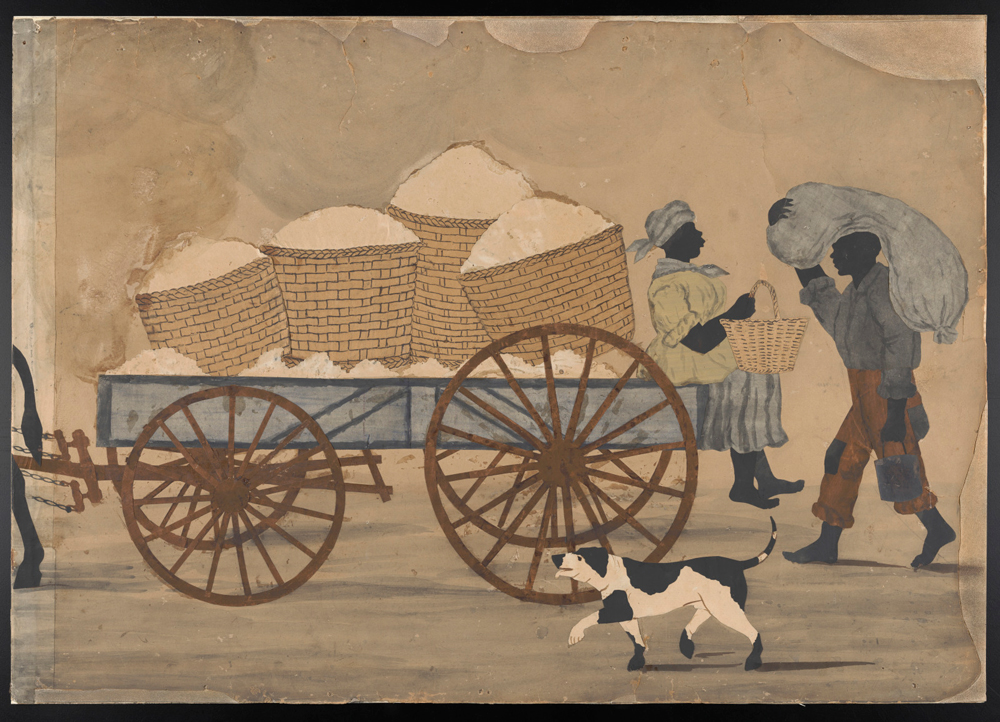
19.375″x27.5625″; paper cutouts and watercolor on watercolor background; 1837-1847. Courtesy of the Historic New Orleans Collection, 1975.93.4.
COLLAGE ON VIEW
The Historic New Orleans Collection
520 Royal Street, New Orleans, LA 70130
www.hnoc.org
The Historic New Orleans Collection’s collection of collage on display includes the Brulator Courtyard Mosaic (2019) by Tana Coman and Picture Mosaic LLC, which includes images drawn from HNOC’s holdings, publications and exhibition graphics, and depicts the courtyard at HNOC’s Royal Street location. Homage to the French Quarter (1975) by Noel Rockmore is filled with neighborhood imagery. Upstairs Lounge 1 (2019) is a collage by Peter Mallen in honor of the thirty-two queer men who were killed in the Upstairs Lounge fire on 24 June 1973. In the holdings of the Williams Research Center at 410 Chartres Street are Gentlewoman and Gentleman, rare examples of late 18th-early 19th century collage; Mardi Gras Parade Scene (1945), by muralist Paul Ninas (1903-1964), a pastiche view based on multiple 1890s Proteus parades; William Henry Brown’s (1808-1883) Hauling the Whole Weeks Pickings; the Louisiana Cycling Club Spokes Scrapbooks (1887-1891); and the collaged architectural drawings of 722 Toulouse Street, made in 1978 to commemorate the opening of HNOC’s new Manuscript Division, among others.
ABOUT KOLAJ FEST NEW ORLEANS
Kolaj Fest New Orleans is a multi-day festival and symposium. Since the festival was first presented in 2018, its goal has always been to bring together collage artists and art professionals to elevate the status of collage. The festival is presented by Kolaj Institute, a 501(c)3 non-profit organization based in New Orleans, whose mission is to support artists, curators, and writers who seek to study, document, and disseminate ideas that deepen our understanding of collage as a medium, a genre, a community, and a 21st century movement; and Kolaj Magazine, a quarterly, printed, art magazine reviewing and surveying contemporary collage with an international perspective, founded in 2012.
Each year, we gather in New Orleans to celebrate collage and its role in art, culture, and society. Symposium sessions bring together a group of artists who speak about a central theme. Artists, writers, academics, and curators present slideshows which are followed by a Question & Answer period. Projects are activities that unfold over the course of the festival and often lead to exhibitions or publications that take place after the event. While led by an artist or group of artists, projects are often open to collaboration from Kolaj Fest Participants. Workshops offer participants the opportunity to engage with their process or materials in a new way; explore subjects or themes; or practice a new collage technique to make. Over a dozen workshops take place during the festival. Special Events at Kolaj Fest New Orleans include screenings, performances, exhibition openings, gallery talks, and other activities.
ABOUT THE HISTORIC NEW ORLEANS COLLECTION
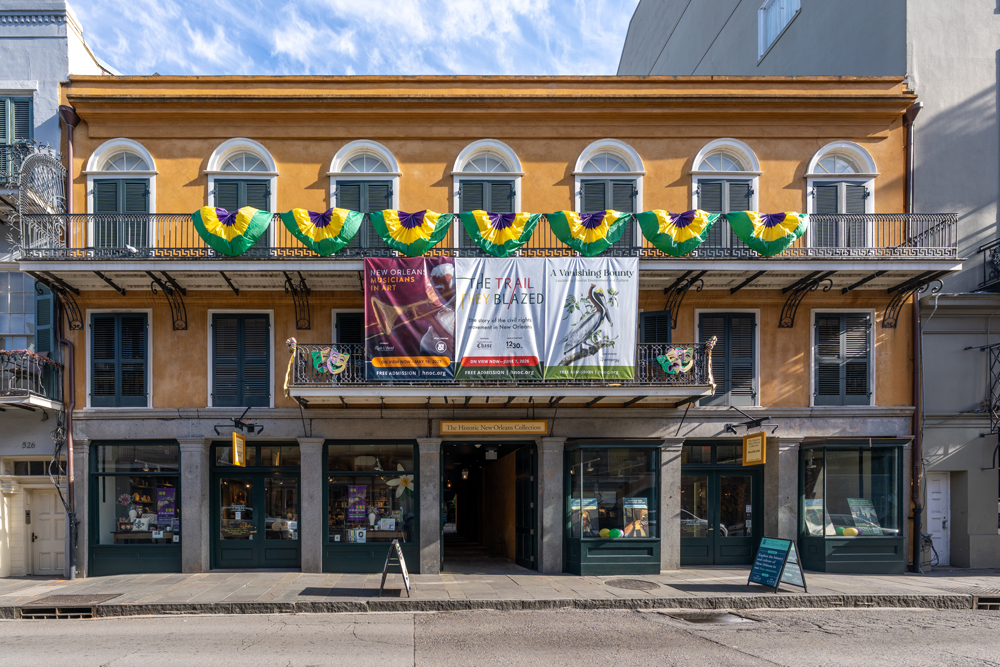
The Historic New Orleans Collection (HNOC), a museum, publisher, and research center, was founded in 1966 and grew from the collection of its founders, Kemper and Leila Williams.”The Historic New Orleans Collection (HNOC) strives to expand our understanding of the past, present, and future through research, stories, objects, documents, and works of art,” wrote the organization. “We share our passion for the meanings of history and culture so people from our diverse communities and beyond recognize their own experiences and relevance to their own lives. Through our respect for the traditions, culture, and history of all people, we welcome everyone in our quest to build an equitable and enlightened future.” Through a no-charge museum on Royal Street and a research center on Chartres Street, HNOC makes history available to the general public and history researchers. HNOC has been an invaluable asset to collage artists who visit New Orleans to research and make art about the city.