
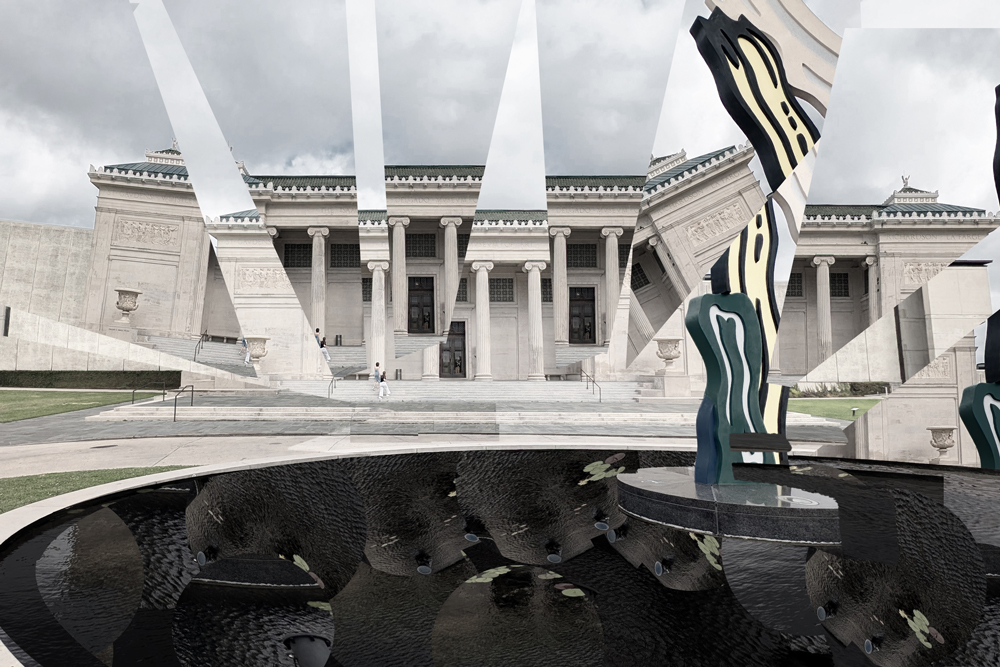
AT KOLAJ FEST NEW ORLEANS 2026
Kolaj Fest New Orleans Visits the New Orleans Museum of Art
EVENT WEBSITE | REGISTER
Kolaj Fest New Orleans is a multi-day festival and symposium about contemporary collage and its role in art, culture, and society, 10-14 June 2026. Visit the website to learn more, see an overview of the program, and register to attend.
Kolaj Institute is excited to partner with the New Orleans Museum of Art on a morning of programs. Kolaj Institute Director Ric Kasini Kadour will officially open Kolaj Fest New Orleans at Thursday’s Daily Collage Congress. As the primary orientation to Kolaj Fest New Orleans, we will hear from a number of artists about projects, activities, and exhibitions taking place during the festival. Boston, Massachusetts artist Nikola Janevski will present “New Orleans-Magic and Protection”, a fashion show of collage jackets made in collaboration with New Orleans artists during his Solo Residency at Kolaj Institute. Carolyn E. Oliver (Carlsbad, California) and Robin Sanford Roberts (San Diego, California) will present an overview of Robert Rauschenberg’s life, work, and process during “We Are All Collaborators in Someone Else’s Journey: Robert Rauschenberg & Process.” During “Divas, Blues, & Memories,” independent, New York City-based curator Souleo will present the artwork of Beau McCall and speak to how the artist illuminates identity and preserves the memory of queer people from disco to the LGBTQ+ rights movement, through the AIDS crisis. Programs and collage making take place in the Lapis Center for the Arts and are open to anyone visiting the museum.
“We are exceptionally grateful to the New Orleans Museum of Art who has hosted Kolaj Fest New Orleans for three years in a row,” said Kadour. Our hope is that we leave armed with new ideas for our artmaking, writing, and curatorial projects, but more importantly, we will leave Kolaj Fest New Orleans with an expanded network of contacts prepared to champion this art form in the year to come.
DAILY CONGRESS THURSDAY
Welcome to Kolaj Fest New Orleans
Thursday, 11 June 2026, 10:30-11:15AM
New Orleans Museum of Art
Kolaj Institute Director Ric Kasini Kadour will officially open Kolaj Fest New Orleans at Thursday’s Daily Collage Congress and hear from a number of artists about projects, activities, and exhibitions taking place during the festival. Artists will be invited to contribute to the Great Collage Swap taking place on Sunday. Thursday’s Congress is the primary orientation to Kolaj Fest New Orleans.
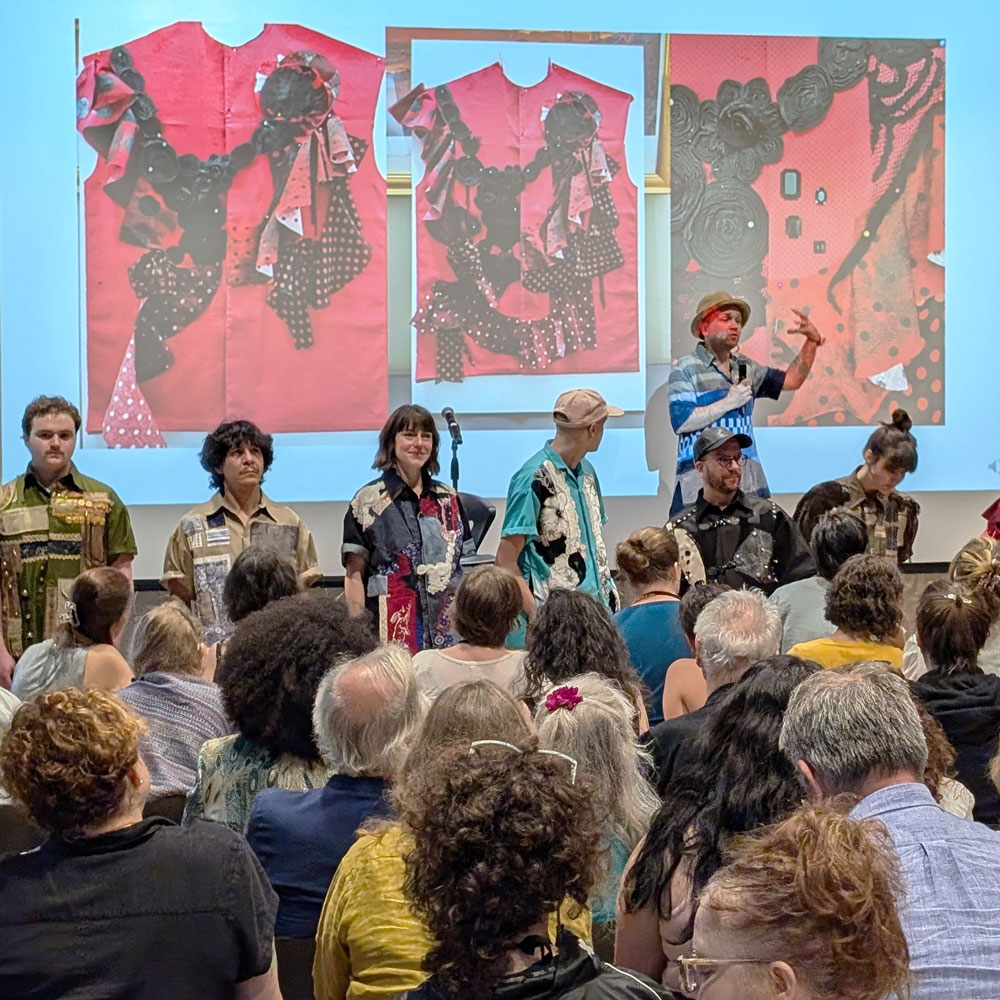
Boston, Massachusetts artist Nikola Janevski will present “New Orleans-Magic and Protection”, a collection of collage jackets made in collaboration with New Orleans artists during his Solo Residency at Kolaj Institute. In the series, the jacket becomes the substrate. “Each piece is about exploring some aspects of identity,” said Janevski. “The series is inspired by the art and culture of New Orleans working with people that are from New Orleans or live here.” At Kolaj Fest New Orleans 2025, Janevski debuted “Reveries: Fragments of Identity,” a collection of collaged shirts made in collaboration with Andrea Burgay. During a December 2025 Solo Residency at the Kolaj Institute, Janevski worked with New Orleans artists LaVonna Varnado Brown, Cindy Green, Christopher Kurts, Chachi Lewis, and Michael Pajón to make the new series, which will debut as a fashion show during Thursday’s Daily Collage Congress.
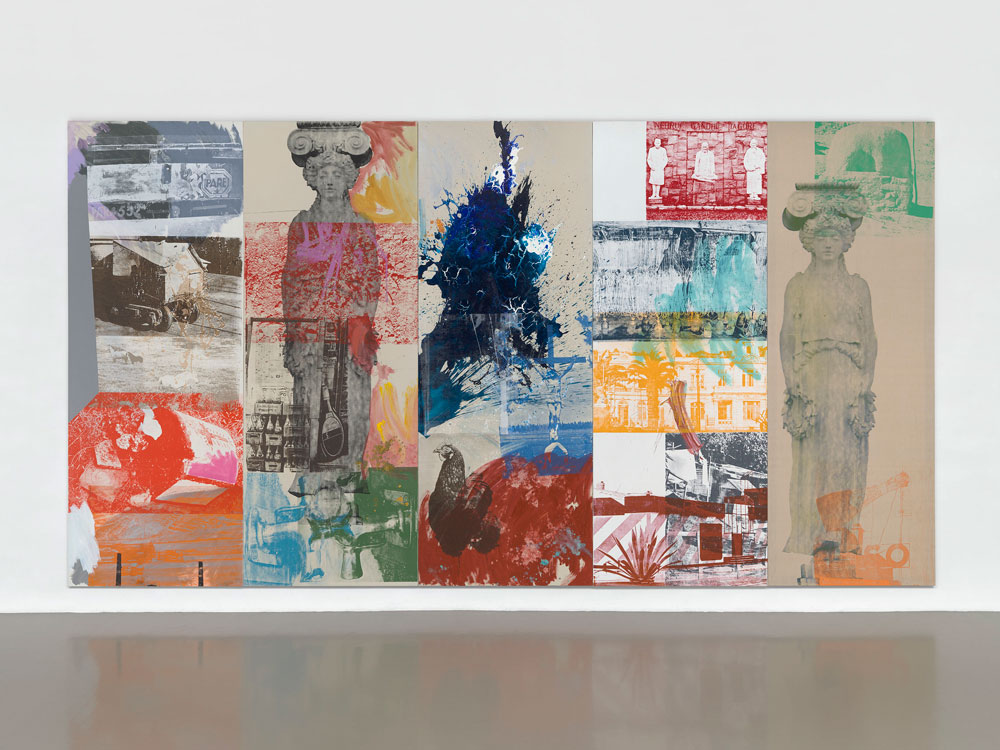
138.625″x258.125″; silkscreen ink, acrylic, and graphite on canvas; 1985. Courtesy of the Robert Rauschenberg Foundation, RRF 85.022
SYMPOSIUM
We Are All Collaborators in Someone Else’s Journey: Robert Rauschenberg & Process
Carolyn E. Oliver & Robin Sanford Roberts
Thursday, 11 June 2026, 11:15-11:45AM
New Orleans Museum of Art
Robert Rauschenberg is recognized as the greatest collaborator of any major American artist. He fundamentally redefined art as a collective encounter rather than a solitary act. His philosophy that “ideas are not real estate” allowed him to share credit and creative space in a way that was revolutionary for the typically individualistic American art world. His use of found objects was defined by his desire to bridge the gap between “art and life” and that they were inseparable. This approach became a vehicle for Rauschenberg’s commentary on social issues. His transfer and collage work from 1958 to 1970 played a critical role in opening conversations about social justice, addressing the civil rights movement and the Vietnam War which sparked an unprecedented upheaval in politics, culture, and mores. Rauschenberg believed that his collages were a documentation of “a particular event at a particular time and is still being affected”. He described it as a “double document”, a record of the moment it was created and an ongoing, evolving entity affected by time and space.
During this presentation, Carolyn E. Oliver (Carlsbad, California) and Robin Sanford Roberts (San Diego, California) will present an overview of Rauschenberg’s life, work, and process. Oliver will share her experience with fashion designer Jason Wu, whose 2026 Spring/Summer Fashion Show at the Brooklyn Navy Yard paid homage to Rauschenberg. Rauschenberg’s transfer works were printed on large acrylic panels as the models wove in and out. Oliver wrote, “Wu’s art of layering and deconstructing fabrics offered the viewers a visual enchantment of distortion and fragmented beauty.” Rauschenberg’s art and Wu’s fashion created a “double document” of global interest. Set designer and professor Robin Sanford Roberts will share views of her theatrical set designs inspired by Rauschenberg.
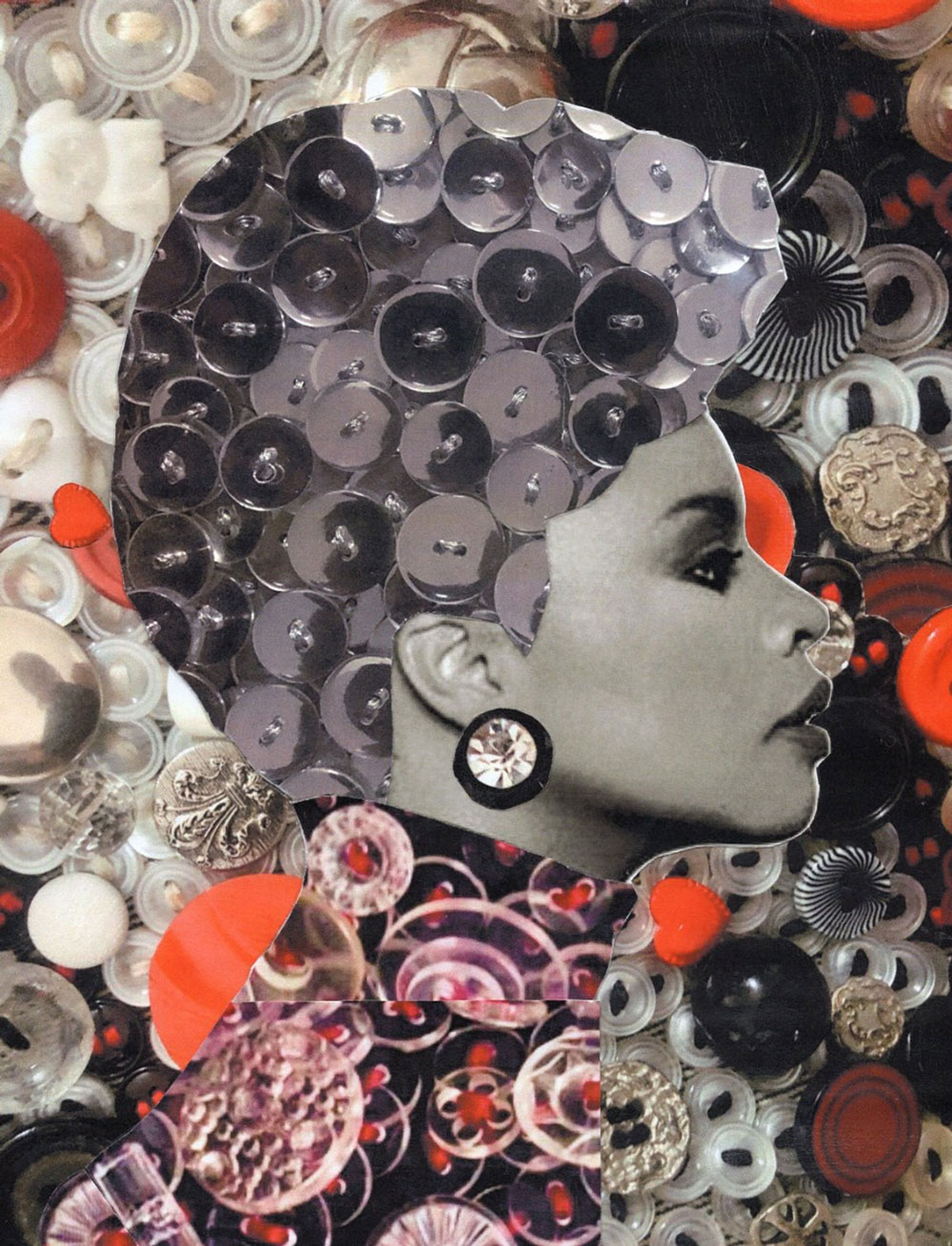
36″x24″; collage printed with dye sublimation on aluminum; 2025. Courtesy of the artist.
SYMPOSIUM
Divas, Blues, & Memories
Artist Beau McCall & Curator Souleo
Thursday, 11 June 2026, Noon-12:30PM
New Orleans Museum of Art
In early 2026, Hammonds House Museum in Atlanta, Georgia presented the exhibition, “Beau McCall: Divas, Blues, and Memories,” curated by New York, New York curator Souleo. The exhibition included over thirty collages that together celebrate music’s role as a source of inspiration, cathartic emotional solace, and marker of significant life experiences. McCall created each collage by hand using his personal archival photos and papers, along with images from his button-embellished artwork. Once completed, the works were scanned and printed on metal for luminosity. The collage references two of McCall’s earlier series.
“Diva Worship” features portraits of both famous and underrepresented divas–of all gender identities–whose music inspired, empowered, and captivated McCall, particularly during his coming-of-age in the 1970s LGBTQ+ community. Throughout history and within various cultures, divas have been “worshipped” or admired for their talent, personality, and achievements, especially by marginalized communities who identify with the diva’s own struggles against systemic prejudice and discrimination. Thus, McCall’s collages laud these divas whose music and personas reflect the ability to challenge, and sometimes even triumph over, oppressive forces, and offer a space for escapism, reflection, and aspiration.
The collages in McCall’s “REWIND: MEMORIES ON REPEAT” series spotlight music’s ability to forge bonds and serve as a “soundtrack” for our lives, conjuring memories. The collages feature some of McCall’s deceased friends from the late 1970s to the mid-1990s, from Philadelphia to New York, during the LGBTQ+ rights movement, the height of disco music, and the AIDS crisis. Within these friendships, music was a galvanizing force, whether they attended concerts, partied at the disco, shared playlists, impersonated their favorite divas, or pursued their own musical dreams of stardom. Thus, McCall invites viewers to celebrate music as a uniting force and keeper of memories.
In this session, McCall and Souleo will present the exhibition, focusing on how collage—and McCall’s use of clothing buttons—illuminates themes of identity and preserves memory.
Immediately following the session, Lisa Rotondo-McCord, curator of the exhibition, “Robert Gordy: Outside the Mainstream,” will lead a walk through of the exhibition. “Louisiana native Robert Gordy (1933–1986) achieved national recognition for masterly compositions that revealed a sophisticated and disciplined interplay of space, line, and color. Although best known today for his prints and late monotypes, Gordy worked in a range of media throughout his career. This exhibition, the first in-depth presentation of the artist’s work at NOMA in over four decades, shares selections from Gordy’s career from the 1950s until his premature death from AIDS in 1986.”
COLLAGE ON VIEW
Exhibitions at NOMA
The New Orleans Museum of Art (NOMA) and its Sydney and Walda Besthoff Sculpture Garden present exhibitions, installations, educational programs, and research. The museum holds a collection of nearly 50,000 works, with holdings in African art, photography, decorative arts, as well as artwork from France, Japan, and the US, and an expanding collection highlighting contemporary artists. During your visit to NOMA, you’ll find collage in the current exhibitions: “George Dureau: Selected Photographs” (through 9 August 2026). The artist used elements of photography—like light, tone, and form—to make a picture that represents both the physical and interior lives of the person in front of the camera and “Robert Gordy: Outside the Mainstream” (through 11 October 2026). A large part of Gordy’s practice was monotype, in which the artist reveled in the freedom and expressive possibilities it afforded. In the Modern Art Galleries on the Second Floor is Robert Rauschenberg’s 1979 collage Melic Meeting (Spread).
On Permanent Display: Melic Meeting (Spread) by Robert Rauschenberg (Modern Art Galleries, Second Floor) As part of the celebration of Robert Rauschenberg’s 100th birthday in 2025, the New Orleans Museum of Art asked artists Ryan Leitner; LaVonna Varnado Brown, part of the 2024-2025 Creative Assembly Cohort; and Ric Kasini Kadour, Kolaj Institute Director, to reflect on his legacy in the work Melic Meeting (Spread) from 1979. Kadour wrote, “Melic Meeting brings me a great deal of joy and if I’m honest, no small part of that is the blue point Siamese cat staring at you when you look at the artwork. Rauschenberg is a mythic figure in the art world, but his artwork comes from a place of deep thinking about humanity.” See the work in the museum’s Modern Art Galleries on the second floor.
“George Dureau: Selected Photographs” through 9 August 2026. New Orleans artist George Dureau (1930–2014) began making photographs in the 1960s as an aid to his painting and drawing centered on the human figure. Consequently, his photography focused on muscular contours, faces, and poses inspired by western art history. By the mid-1970s, Dureau increasingly explored the camera’s capacity to render the human form clearly and beautifully while experimenting with light, space, and the body as compositional elements. As much as Dureau’s photographs flaunted taboos against presenting images of nude men, particularly Black men, in a gallery or museum setting, they illustrate his attempt to use elements of photography—like light, tone, and form—to make a picture that represents both the physical and interior lives of the person in front of the camera.
“Robert Gordy: Outside the Mainstream” through 11 October 2026. Louisiana native Robert Gordy (1933–1986) is best known today for his prints and late monotypes, but he worked in a range of media throughout his career. This exhibition shares selections from Gordy’s career from the 1950s until his premature death from AIDS in 1986. In 1982, Gordy turned almost exclusively to the creation of monotypes, unique prints made through the direct application of pigment to the printing plate. While print-making had always been an important component of his practice, it now took precedence. Using a large-scale press, Gordy reveled in the freedom and expressive possibilities afforded by the process. The artist’s gesture, always present in Gordy’s preliminary drawings and sketches, but absent from his completed paintings, sat at the forefront.
ABOUT KOLAJ FEST NEW ORLEANS
Kolaj Fest New Orleans is a multi-day festival and symposium. Since the festival was first presented in 2018, its goal has always been to bring together collage artists and art professionals to elevate the status of collage. The festival is presented by Kolaj Institute, a 501(c)3 non-profit organization based in New Orleans, whose mission is to support artists, curators, and writers who seek to study, document, and disseminate ideas that deepen our understanding of collage as a medium, a genre, a community, and a 21st century movement; and Kolaj Magazine, a quarterly, printed, art magazine reviewing and surveying contemporary collage with an international perspective, founded in 2012.
Each year, we gather in New Orleans to celebrate collage and its role in art, culture, and society. Symposium sessions bring together a group of artists who speak about a central theme. Artists, writers, academics, and curators present slideshows which are followed by a Question & Answer period. Projects are activities that unfold over the course of the festival and often lead to exhibitions or publications that take place after the event. While led by an artist or group of artists, projects are often open to collaboration from Kolaj Fest Participants. Workshops offer participants the opportunity to engage with their process or materials in a new way; explore subjects or themes; or practice a new collage technique to make. Over a dozen workshops take place during the festival. Special Events at Kolaj Fest New Orleans include screenings, performances, exhibition openings, gallery talks, and other activities.
ABOUT THE NEW ORLEANS MUSEUM OF ART
The New Orleans Museum of Art (NOMA) and its Sydney and Walda Besthoff Sculpture Garden are home to innovative exhibitions, installations, educational programs, and research. Exploring human creativity across time, cultures, and disciplines, the global scope of the museum’s initiatives open a vibrant dialogue with the history and culture of New Orleans. The museum stewards a collection of nearly 50,000 works, with exceptional holdings in African art, photography, decorative arts, and Japanese art, as well as strengths in American and French art, and an expanding collection highlighting contemporary artists. The museum’s exhibitions and dynamic learning and engagement offerings serve as a forum for visitors to engage with diverse perspectives, share cultural experiences, and foster a life of learning at all ages.
NOMA’s 12-acre Sydney and Walda Besthoff Sculpture Garden expands visitors’ experiences of the museum with one of the most notable sculpture gardens in the country. The Besthoff Sculpture Garden, free and open to the public seven days a week, has nearly 100 sculptures and outdoor works of art situated in a unique landscape featuring Spanish moss-laden live oaks and a sinuous lagoon surrounded by an expansive ecosystem of native plants. The works in the garden range from the 19th to the 21st centuries, with pieces by Auguste Rodin, Louise Bourgeois, Ida Kohlmeyer, Claes Oldenburg, Larry Bell, Sean Scully, Fred Wilson, Maya Lin, Ursula von Rydingsvard, Teresita Fernández, Ugo Rondinone, Hank Willis Thomas, and many others. The Besthoff Sculpture Garden features contemporary design elements—including a sculpture pavilion, an amphitheater, and an architecturally significant canal link bridge connecting the garden’s original 2003 footprint with a 2019 expansion. Its water management practices support the health and resiliency of New Orleans City Park and the surrounding environment. Throughout the year, NOMA hosts outdoor programs in the Besthoff Sculpture Garden including festivals, performances, wellness classes, tours, and more.
Kolaj Fest New Orleans is a multi-day festival and symposium about contemporary collage and its role in art, culture, and society, 10-14 June 2026. Visit the website to learn more, see an overview of the program, and register to attend.