

RESIDENCY UPDATE
War Stories: Collage & Conflict
A four-week, virtual/online residency with Kolaj Institute in October 2026
ABOUT THE PROJECT
In 1666, Dutch Golden Age seascape painter Willem van de Velde the Elder (1610-1693) found himself the official artist of the Dutch fleet during the Four Days Battle during the Second Anglo-Dutch War (1665-1667). Working from a small boat, he made an oil and ink drawing of the admiral’s ship that was later added to a report about the event. The idea of Artist as War Correspondent was born. As newspaper and magazine publication took shape in the 17th century, publishers were eager for visual representation of conflict. André Basset and Francois Xavier Habermann’s engraving, Représentation du Feu Terrible à Nouvelle Yorck (1777), brought news of “New York burning while people evacuate and loot buildings, and red-coated soldiers accost citizenry” during the American Revolution while James Gillray’s Six-Pence a Day (1775) presented a satirical view of the conflict that made a caricature of both the hard life of the British soldiers and the earnestness of the American rebels. As photography and moving images came into practice, an entire genre of War Correspondence emerged that reported on conflict and illustrated suffering and destruction. Sometimes these images exposed war crimes and sometimes they served as propaganda to their contemporary audiences.
In 2026, the German magazine, Wissenschaft & Frieden (Science & Peace), “the leading interdisciplinary academic journal for peace research, peace policy, and the peace movement,” will dedicate an issue to reporting on war.
Editor Adrian Paukstat wrote about the issue’s topic, “How do we learn about peace agreements, escalations of violence, and declarations of war today? Who informs the world about what is happening, how is the information organized and selected, and how is it decided what gets reported? How does the visibility of wars in the media influence how they are reported on? What impact do new formats, platforms, and forms of journalism have on our current view of wars, crises, conflicts, violence, and peace processes—and on our understanding of the opportunities and threats to peace globally? This issue is dedicated to the latest developments and transformations in journalism and war- and conflict reporting. By drawing on examples from around the world, we also aim to challenge the conventional European bias in media attention—and to ask what successful conflict reporting looks like in other parts of the world.” The editors have offered Kolaj Institute’s Politics in Collage Project their pages as a platform for sharing how collage artists can make art that contributes to this discourse.
The editors offered Kolaj Institute’s Politics in Collage Project their pages as a platform for sharing how collage artists can make art that contributes to this discourse.
Unlike journalists concerned with the news of the day, artists make art for the future. Spanish painter Francisco Goya’s intaglio print series, “Los desastres de la guerra” (The Disasters of War) made between 1810 and 1820 made visible the atrocities, starvation, degradation and humiliation he witnessed. The series was not published until 1863, 35 years after his death, when it was politically safe to do so. War correspondents create the first draft of history. How do artists use their work to speak to the civic discourse?
War is a fragmentation: it’s the fracture of political relationships, violence, cultural juxtapositions, the breaking of social bonds, mores, and borders. What do we do when something falls apart? We put it back together again: that’s the work of collage. Peace is often defined as the absence of war, the absence of violence. How do we imagine the absence of something? A successful, lasting peace reassembles the fragments back into a cohesive, healed whole. War reporting often invites its audience into overly simplistic explanations of conflict–a good side and a bad side–that seldom support the sort of caring, curious, complex thinking that allows peace to take root and bloom.
RESIDENCY
During the War Stories: Collage & Conflict Virtual Collage Artist Residency, collage artists worked together to make artwork that responded to historical and contemporary war correspondence. Participating artists researched how war and peace are reported. They heard from Adrian Paukstat about how Wissenschaft & Frieden is developing articles about the topic in the magazine. Artists explored the history of political collage, from its early 20th century roots in the European anti-fascist movements to how contemporary artists are engaged in projects centered around political collage. They learned about Artist Practice and strategies for the diffusion of political collage into the ecosystems of art and their own communities. Discussions and presentations centered on how an artist can make work that picks up the unfinished work of history and contribute to the civic discourse. Beginning the second week, artists presented a weekly collage they made that responded to historical and contemporary war correspondence and received critical feedback. Artists developed statements about their work that documented the history and context for the artwork they made. Artists left the residency equipped with the skills to make political collage and to develop their skills as illustrators as part of their larger artist practice.
OUTCOME
A selection of artworks made during the residency will be included in issue 4/2026 of Wissenschaft & Frieden along with a commentary by project curator Ric Kasini Kadour. An additional selection of artworks will be published as a folio of prints by Kolaj Institute and made available for exhibitions. Artists will be invited to submit work for consideration for the War & Peace Correspondence Project. Artists will be invited to speak about their work at a Kolaj LIVE Online event in January 2027.
PARTICIPATING ARTISTS
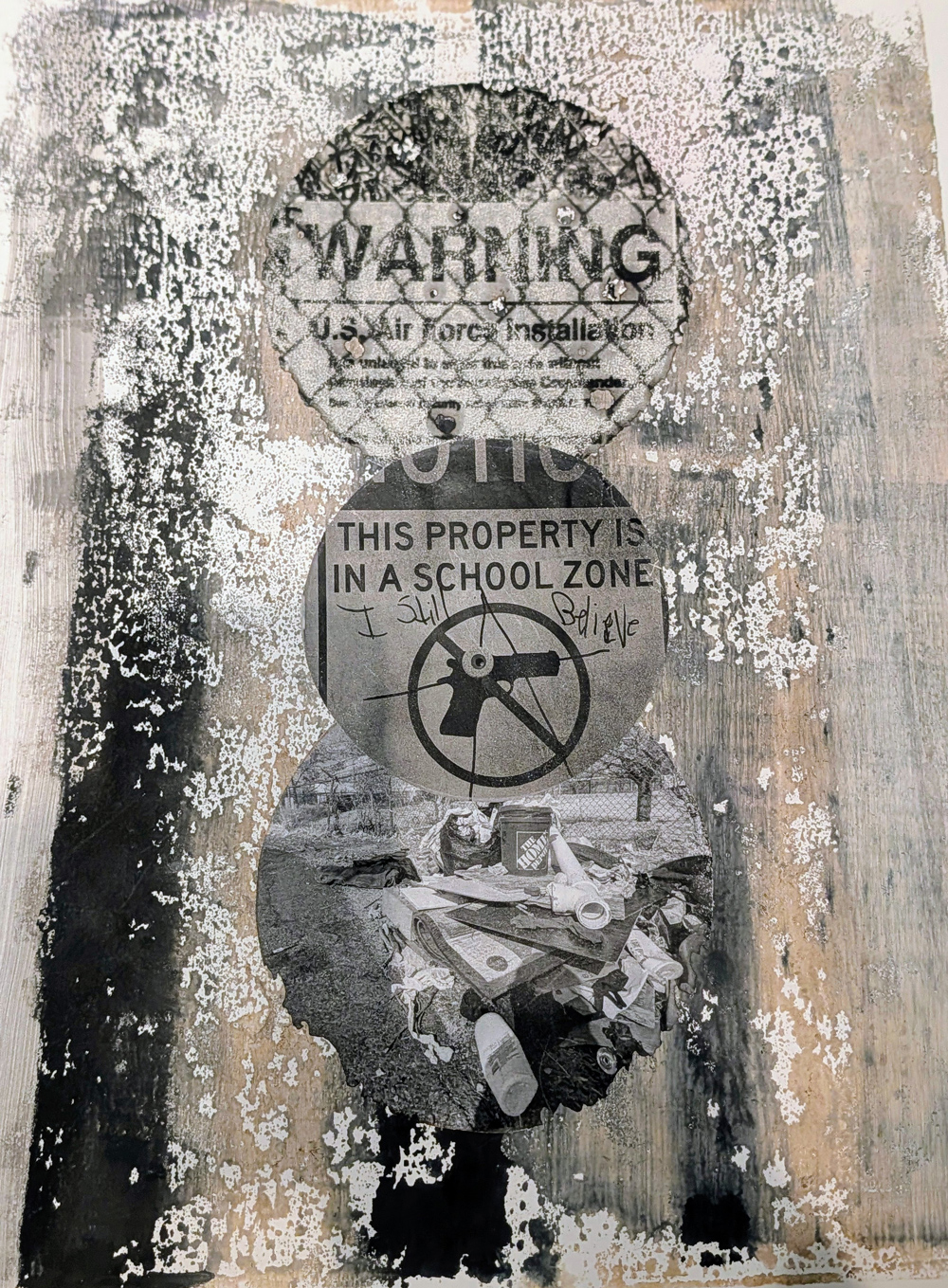
20″x”18″; monotype photo collage; 2025. Courtesy of the artist.
David D’Agostino, Albuquerque, New Mexico, USA
www.daviddagostino.com
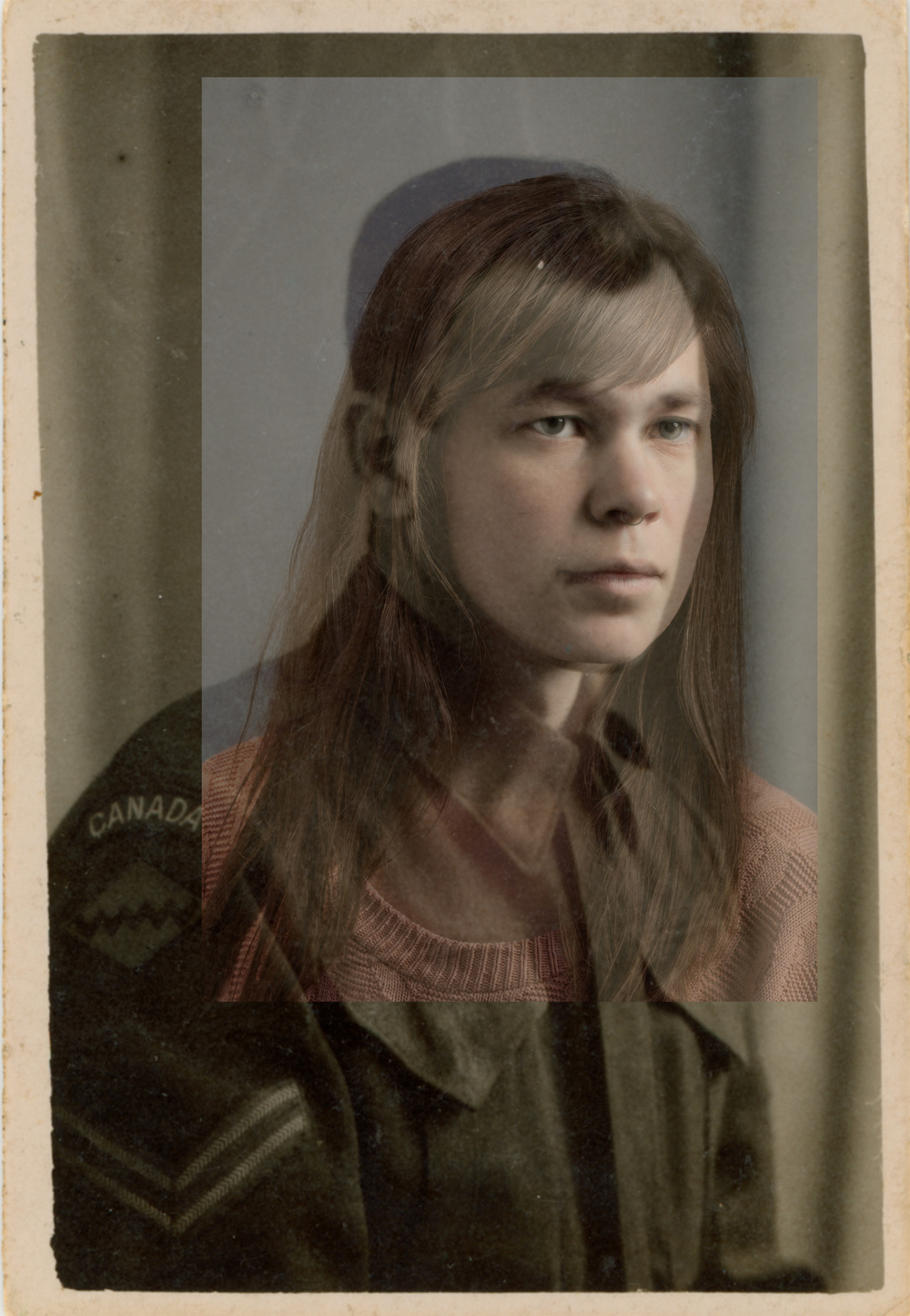
digital collage; 2026. Courtesy of the artist.
Morgane Clément-Gagnon, Montreal, Quebec, Canada
www.morganecg.com
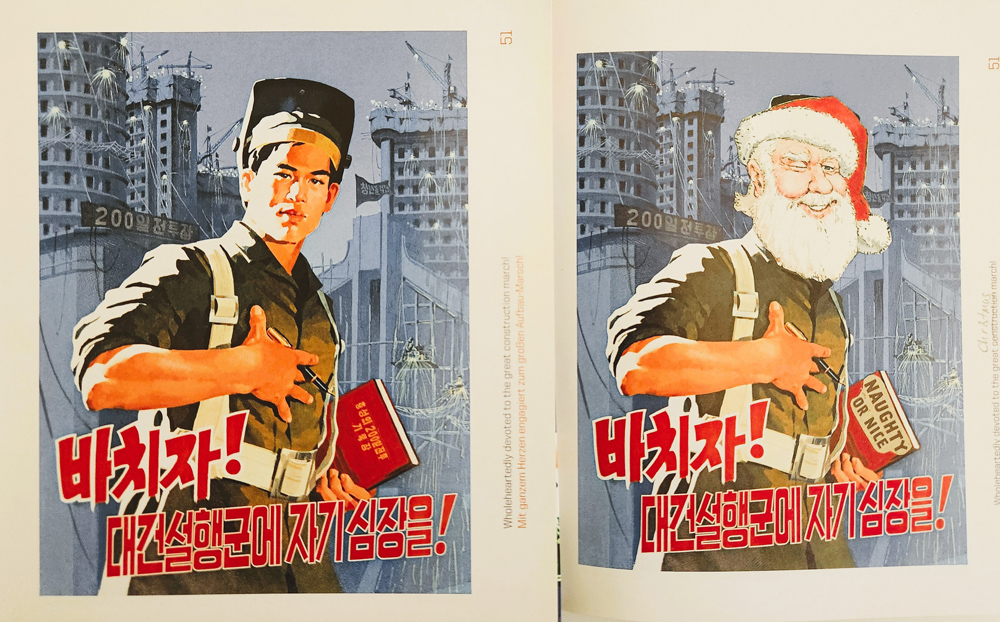
10″x16″; analogue paper collage; 2025. Courtesy of the artist.
Talon, Sacramento, California, USA
ABOUT RIC KASINI KADOUR
Ric Kasini Kadour, a 2021 Andy Warhol Foundation for the Visual Arts Curatorial Fellow, is a writer, artist, publisher, cultural worker, and the director of Kolaj Institute. His curation work includes exhibitions in Louisiana, New Mexico, Quebec, Scotland, Tennessee, Wisconsin, and Vermont. Kadour is the editor and publisher of Kolaj Magazine, as well as the editor of the Kolaj Institute journals, PoetryXCollage and Folklore Collage Society. He has written for a number of galleries and his writing has appeared in publications including Hyperallergic, OEI, Art New England (where he was the former Vermont editor), and Wissenschaft und Frieden. Kadour maintains an active art practice and his photography, collage, film and sculpture have been exhibited in and are part of private collections in Australia, Europe and North America. In January-February 2020, he was artist-in-residence at MERZ Gallery in Sanquhar, Scotland. He holds a BA in Comparative Religion from the University of Vermont. Kadour splits his time between Montreal and New Orleans.