
RESIDENCY UPDATE
Politics in Collage: Midterm Report on the Rise of Authoritarianism
A four-week, virtual/online residency with Kolaj Institute in September and October 2026
“Authoritarians rightfully see art and free expression as a threat to power. As such, they act to control what is presented…The rise of authoritarianism is a campaign for the hearts and minds of the people. Art fundamentally threatens that campaign.” from the Introduction to The Authoritarian Regime Survival Guide
BACKGROUND: In January 2025, Kolaj Institute organized the residency, Politics in Collage 2025: Authoritarian Regime Survival Guide, that brought together collage artists to make artwork that responds to a global rise in authoritarianism. Artists in the residency worked together to illustrate and elucidate The Authoritarian Regime Survival Guide, a text written by Martin Mycielski, the Vice-President and Executive Director of the Brussels-based Open Dialogue Foundation. Based on the Polish experience, The Authoritarian Regime Survival Guide offers its readers information and tools for recognizing and resisting authoritarianism. In a clear series of lists, the Guide lays out what to expect in a society being led by an authoritarian regime, rules for surviving such a regime, and strategies for engaging with authoritarian supporters. Kolaj Institute has published a book and folio of prints using the artwork made during the residency. The folio of prints serves as a traveling exhibition and has already been exhibited twice: at Fleming College’s Haliburton School of Art & Design in Haliburton, Ontario (October-December 2025) and at the Rochester Art Center in Rochester, Minnesota (August-November 2026).
RESIDENCY: During the “Politics in Collage: Midterm Report on the Rise of Authoritarianism” Residency, collage artists worked together to make artwork that responds to a global rise in authoritarianism that will be published in a zine. Using the book, The Authoritarian Regime Survival Guide, as a starting point, artists learned how to read and decode authoritarianism, to understand how it operates, and strategies for resisting or countering it. (Artists accepted to the residency will be mailed a copy of the book.) Artists explored the history of political collage, from its early 20th century roots in the European anti-fascist movements to how contemporary artists are engaged in projects centered around political collage. Discussions and presentations centered on how an artist can make work that picks up the unfinished work of history and contributes to the civic discourse. Beginning the second week, artists presented a weekly collage they made that responded to an example of rising authoritarianism or resistance to it and received critical feedback. Artists developed statements about their work that document the history and context for the artwork they made.
The residency was led by G.E. Vogt who, since 2021, has led a series of residencies in which artists explored the intersection of politics and collage. These residencies resulted in the books Politics in Collage and Collage Saves The World. Vogt was the artist-in-residence with Ideas Block LT in Vilnius, Lithuania in 2023, wherein she worked with a Russian artist to create an exhibition of works exploring the rise of authoritarianism in their respective countries. Currently, she is the curator of @art_of_resistance, dedicated to showcasing artists creating political work about contemporary issues, and she founded “Project Postcards”, a guerrilla art campaign using postcards to raise awareness to the danger of Project 2025. Vogt’s artwork consistently explores the crippling socioeconomic gap, the various forms of inequality prevalent in the U.S, and the toxicity of our political climate.
The residency asked, “How do we visualize the contemporary political moment?” Artists in the residency heard from Paris, Texas-based Ginger Sisco Cook, an analog political collagist who is working on a four-year project to contextualize the Second Trump Administration by “combining vintage imagery with contemporary media to offer commentary on current political issues.” Cook wrote, “Drawing on my background in Political Science, I use collage to respond to current events, visually and narratively chronicling developments during the Trump second administration. Since January 20, 2025, I have produced 300 analog collages using watercolor paper, magazines, and political mailings, each accompanied by written reflections. My aim is to capture the trends, historic events, and public sentiment of this presidency, offering viewers a visual record that encourages reflection on the American political landscape.” At Kolaj Fest New Orleans 2026, Cook presented a table top exhibition in the Great Hall of the New Orleans Healing Center of collage that collectively presents “a visual representation of political developments in America since January 20, 2025.”
During the Residency, several of the artists who participated in the artist residency, Politics in Collage 2025: Authoritarian Regime Survival Guide, spoke about their experience learning and making art about authoritarianism. They included: Lori Petchers (Fairfield, Connecticut, USA), Heather Wishik (Woodstock, Vermont, USA), Olivia Baldacci (New York, New York, USA), Suzanne Gore (Boise, Idaho, USA), Jen Myhre (Sedona, Arizona, USA), and Andrea Lee (Toronto, Ontario, Canada).
Participants also heard from project curator Ric Kasini Kadour, a 2020-2021 Andy Warhol Foundation for the Visual Arts Curatorial Fellow, whose work centers on how contemporary art can pick up the unfinished work of history and contribute to the present-day civic discourse. Kadour led discussions around artist practice, zines as a strategy for the diffusion of political art, and the role of contemporary art in society.
The goal of this residency was to help collage artists who are creating social/political work, or interested in doing so, to grow and expand their practice. By the end of the residency, the participants were able to practically apply to their own work what they have learned from lectures, discussions, and practical exercises. Due to the high workload that was required of participants throughout, it was recommended that applicants ensured they were able to commit a minimum of ten hours a week to this residency.
OUTCOME
Artwork made during the residency was published as the zine, Mid-term Report on the Rise of Authoritarianism. Artists were invited to speak about their artwork and process during a Kolaj LIVE Online event that took place on Monday, 26 October 2026, 7-9PM EDT.
PARTICIPATING ARTISTS
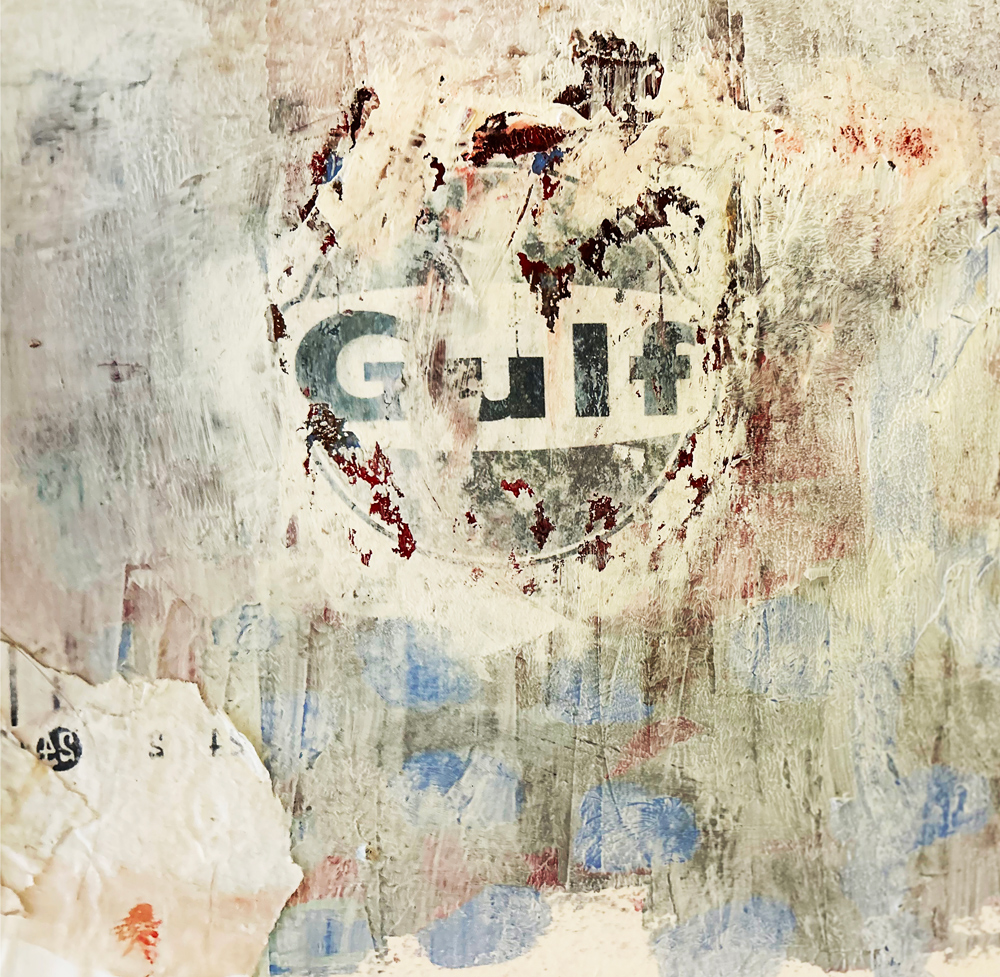
14″x11″; collage on paper, gesso, acrylic; 2025. Courtesy of the artist.
Amanda Shepherd, Scottsdale, Arizona, USA
INSTAGRAM
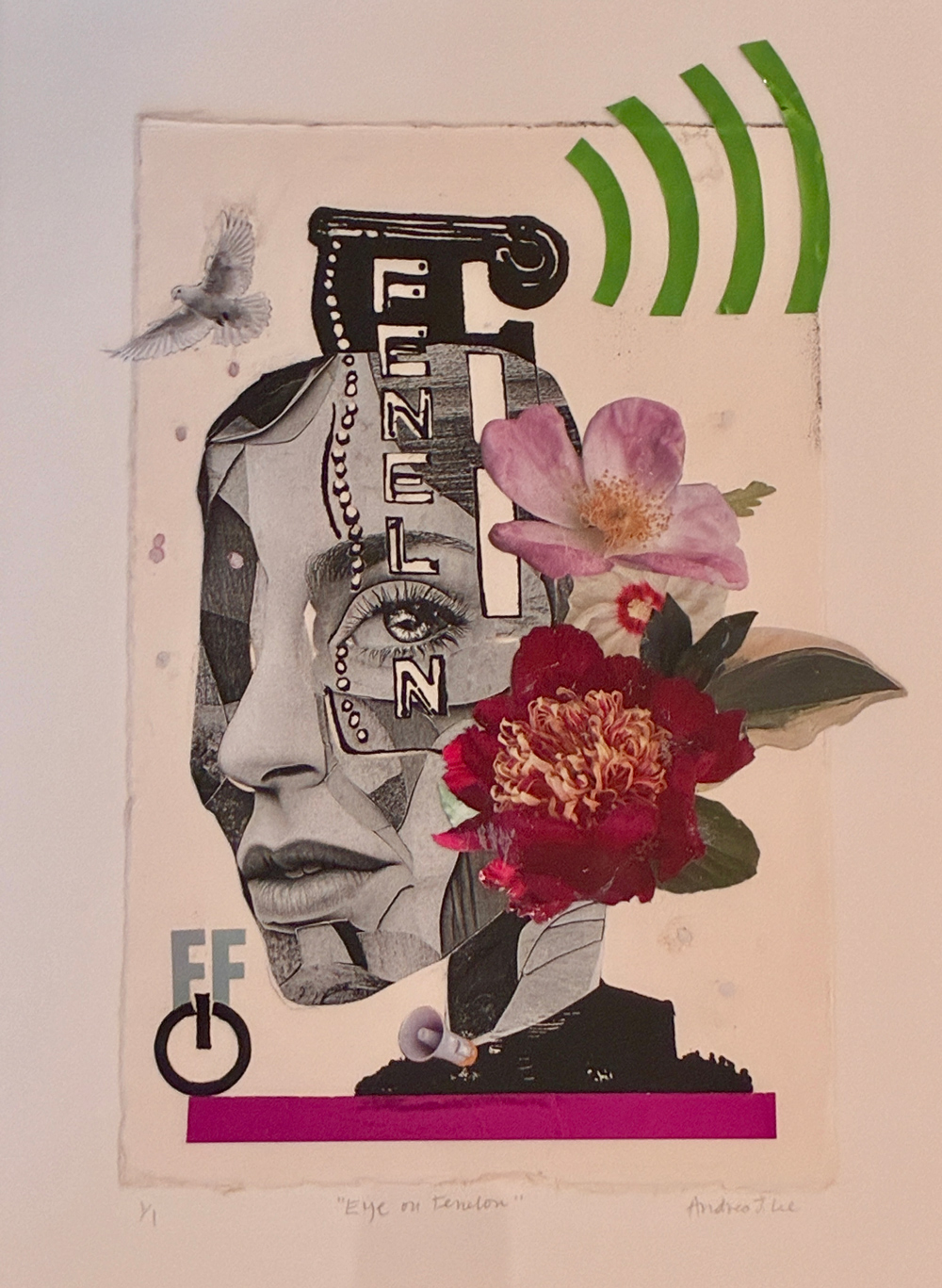
10″x7″; found papers, foil papers, linoprint; 2025. Courtesy of the artist.
Andrea Lee, Toronto, Ontario, Canada
www.andreajlee.com
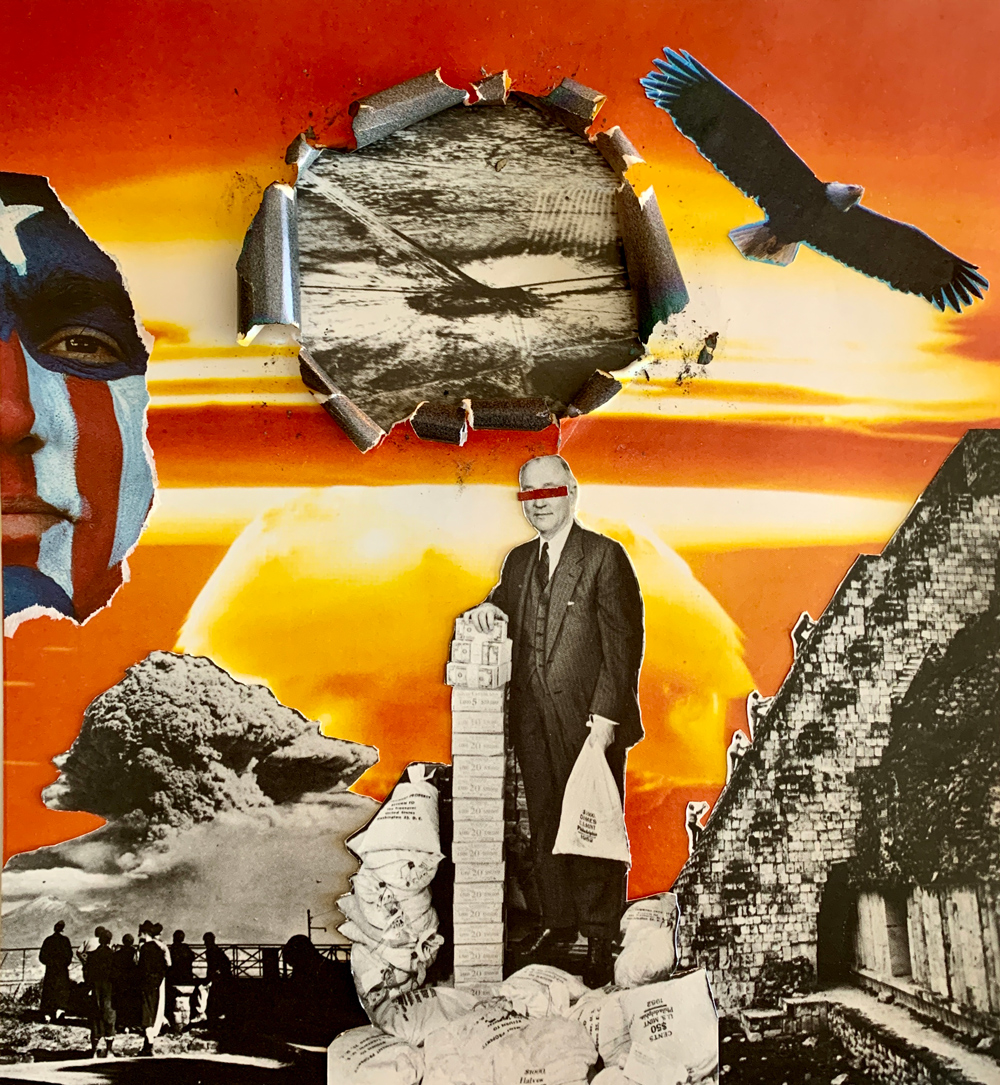
9″x8″; magazine and book clippings; 2026. Courtesy of the artist.
Kayla Collins, Northville, Michigan, USA
INSTAGRAM
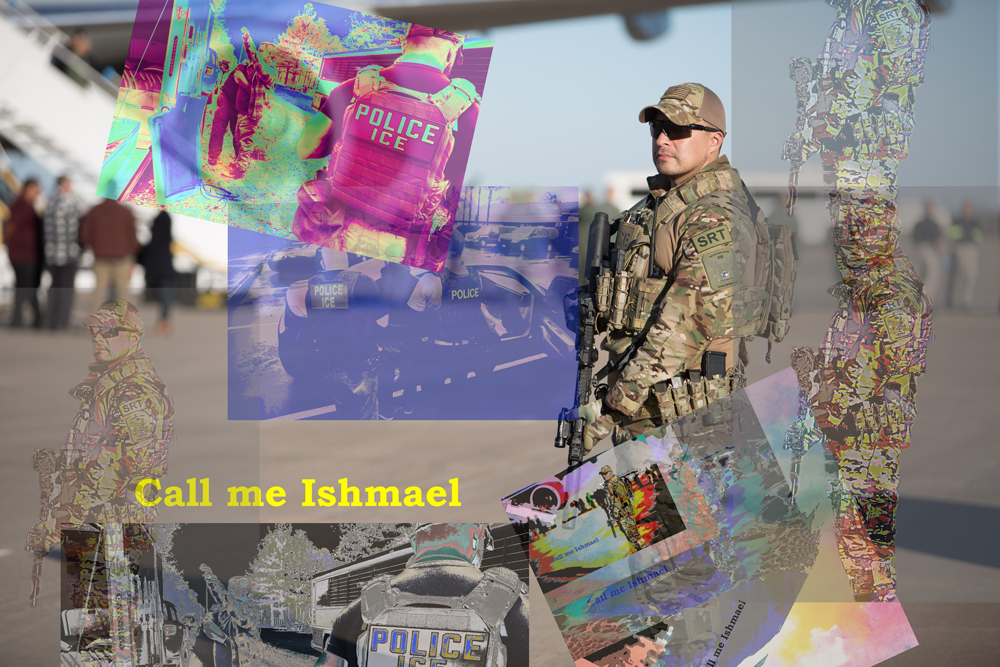
dimensions variable; digital collage; 2026. Courtesy of the artist.
Steven Stark, Belmont, Massachusetts, USA
FACULTY
G. E. Vogt has exhibited in various juried exhibitions across the US. In 2019, Fresh Paint Gallery held a major exhibition of her work and she spoke on the “Women In Collage” panel at Kolaj Fest New Orleans 2019. Her works continue to explore the themes she has been interested in since her performance work which have become increasingly relevant—the unmanageable socioeconomic gap, the various forms of inequality prevalent in the U.S., and the toxicity of our political climate. However, as her work has advanced, Vogt has become increasingly committed to working with and building a community of other socio-political collage artists. She participated in Kolaj Institute’s virtual Money Money Collage Residency, illustrating Eleanor Porter’s 1918 social commentary on capitalism and wealth, Oh, Money! Money!, with eleven other collage artists; and coordinated and directed two of Kolaj Institute’s “Politics in Collage” virtual residencies to further advance the field of socio-political collage, and help artists grow their work in this field. These residencies resulted in the books Politics in Collage and Collage Saves the World. Vogt was the artist-in-residence with Ideas Block LT in Vilnius, Lithuania in 2023, wherein she worked with a Russian artist to create an exhibition of works exploring the rise of authoritarianism in their respective countries. Currently, she is the curator of @art_of_resistance, dedicated to showcasing artists creating political work about contemporary issues, and the founder of “Project Postcards,” a guerrilla art campaign using postcards to raise awareness to the danger of Project 2025. Vogt lives and works in San Diego, California.
ABOUT KOLAJ INSTITUTE’S POLITICS AND COLLAGE PROGRAM
Collage as a political art form has a particular relevance to today as well as a strong historical context. From its roots in the European anti-fascist and Russian revolutionary movements in the early 20th century to its expressions during the U.S. Civil Rights era to its current manifestations in the fight for social justice in South America, collage is used by artists around the world as an impetus for social and political change. Kolaj Magazine has reported on how collage was used to visualize the 2019-2021 Estallido Social in Chile which incidentally birthed a new collage community. In Fall 2021, Kolaj Institute organized a series of residencies in which artists explored the intersection of politics and collage. Led by G.E. Vogt, the residencies produced a collection of artworks that debuted at Kolaj Fest New Orleans in 2022 as an exhibition at the Domino. In July 2022, Kolaj Institute released Politics in Collage, a book of artwork, and an Online Exhibition. In November 2022, a third residency took place which resulted in a second book, Collage Saves The World. In April 2024, the artist residency and exhibition “Collage the Planet: Environmentalism in Art” took place at Kolaj Institute Gallery in New Orleans. A fifth artist residency in October 2025, Collage the Planet: Trash as Material, resulted in the exhibition, “Trash as Material”, at Kolaj Institute Gallery.